Can PVC wall panels be used in a shower?
“Waterproof panel” and “waterproof shower” are different claims. A shower sprays water at seams, corners, taps, niches and the tray junction. Some PVC cladding systems may be designed for this use, but a decorative panel chosen from a photo should not be substituted for a complete wet-area specification.
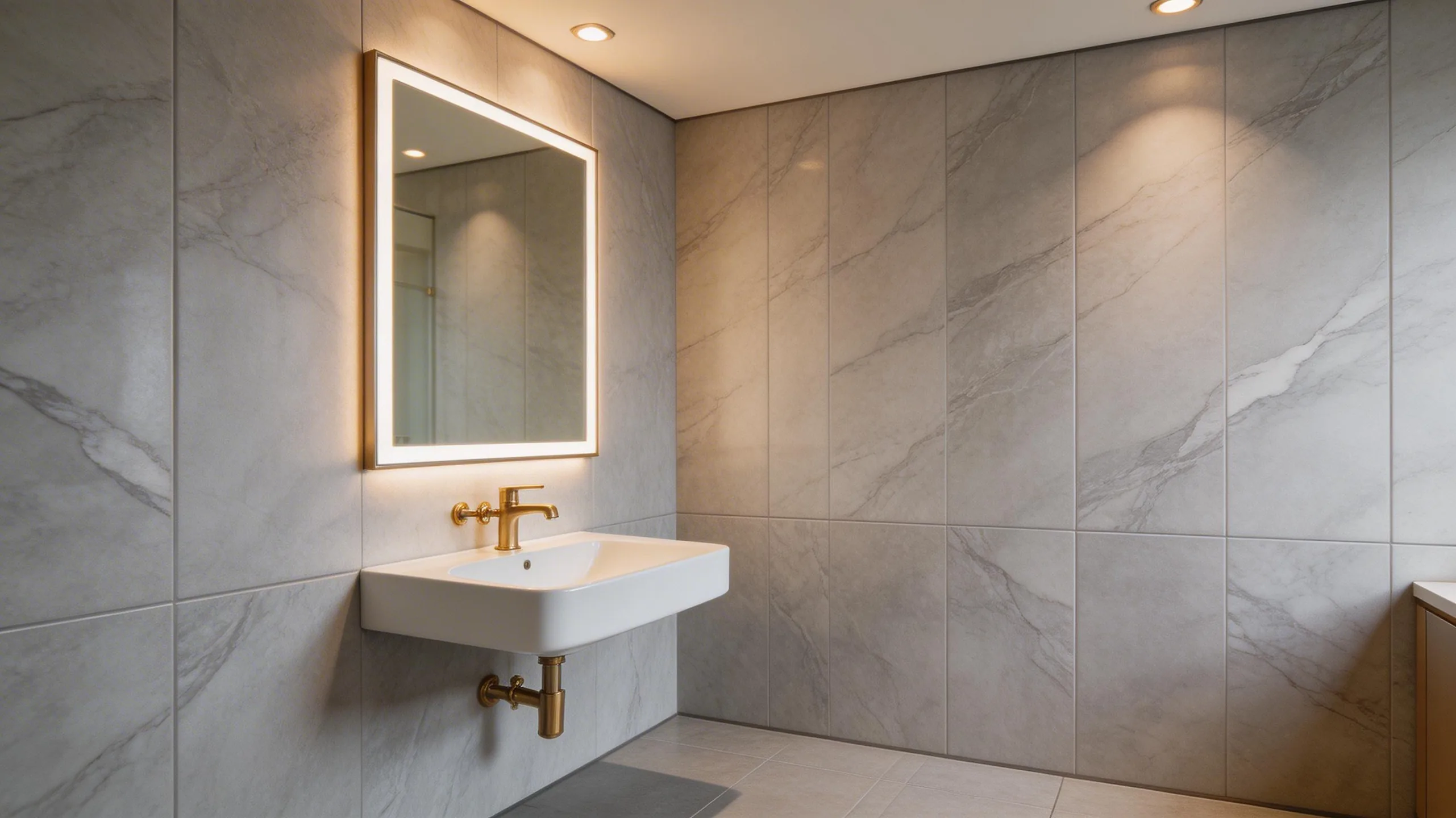
Use a PVC panel in a shower only when the exact system is approved for direct wet exposure and the wall assembly has a suitable waterproofing, joint and penetration plan. The panel face alone is not a substitute for repairing leaks or waterproofing the substrate.
Trace where water can enter
Start at the shower tray or bath rim and work upward. Mark internal corners, outside corners, pipe penetrations, valve covers, shelves, niches and the top termination. Ask whether the specified joint profile and sealant are compatible with the exact panel and cleaning regime. A smooth face may shed water while a poorly detailed bottom edge directs water behind it.
Check the wall before covering it
An existing tile wall can be a renovation substrate only after soundness and moisture are assessed. If there is a leak, damaged board, loose tile or failed waterproofing, covering it makes the diagnosis harder. The EPA’s moisture-control guidance explains why water pathways and building assemblies must be addressed together. The installer or designer should define the waterproofing layer and inspection points for the actual building.
Make the mock-up do real work
Ask for a full-height corner and tray-junction mock-up using the intended trims, sealant and fixing system. Test cleaning access and check how water runs off after use. Keep written installation instructions and a maintenance handover. For imported panels, confirm that replacement pieces and matching trims will remain available, because a damaged panel in a wet zone cannot always be replaced with a visually similar batch.
Illustrative buyer situation
A hotel renovation team wants to cover dated shower tile to reduce demolition. The wall has an old leak near a mixer valve. A fast cladding installation would hide the staining but would not fix the source of water. The team should open and repair the affected area, confirm the waterproofing plan, then mock up the chosen panel at a tray junction and valve penetration. This sequence may take longer before installation, but it avoids treating a decorative face as a repair for failed plumbing.
Buyer checklist before ordering
- Exact SKU approved for direct shower exposure
- Waterproofing and substrate design
- Joint, corner, tray and penetration details
- Maintenance and replacement plan
Save the approved sample, product code and document references with the purchase order. A catalog helps shortlist a finish but does not establish the final specification, local acceptance, price or delivery terms.
Common buyer questions
Does a waterproof PVC surface make the shower waterproof?
No. The whole assembly, especially joints and penetrations, controls water entry.
Can I cover leaking tile with PVC panels?
No. Find and repair the leak and damaged substrate first.
Do I need special trims?
Use the profiles and sealing details approved for the selected wet-area system.
Compare the range and request the exact specification
Browse the relevant product catalog (PDF, English), then tell Luvie the destination market, room or project use, approximate quantity and the finish you want to sample. We can discuss which current SKU and documents are available; do not assume a catalog image establishes certification or a guaranteed lead time.
Turn the question into a verifiable product brief.
Send the application and target market so the conversation starts with a specific product, sample and evidence request.
Ask Luvie about this use