Luvie Industry · 2026-11-06
Review PU stone-look panels in Uzbekistan shop windows
PU stone panels in shop windows in Uzbekistan are viewed through glass, from changing angles and under conditions that differ from an interior sample desk. A display can be visually appealing without demonstrating that the chosen panel is suitable for its exposure. Buyers should review appearance and documented application limits as two separate decisions.
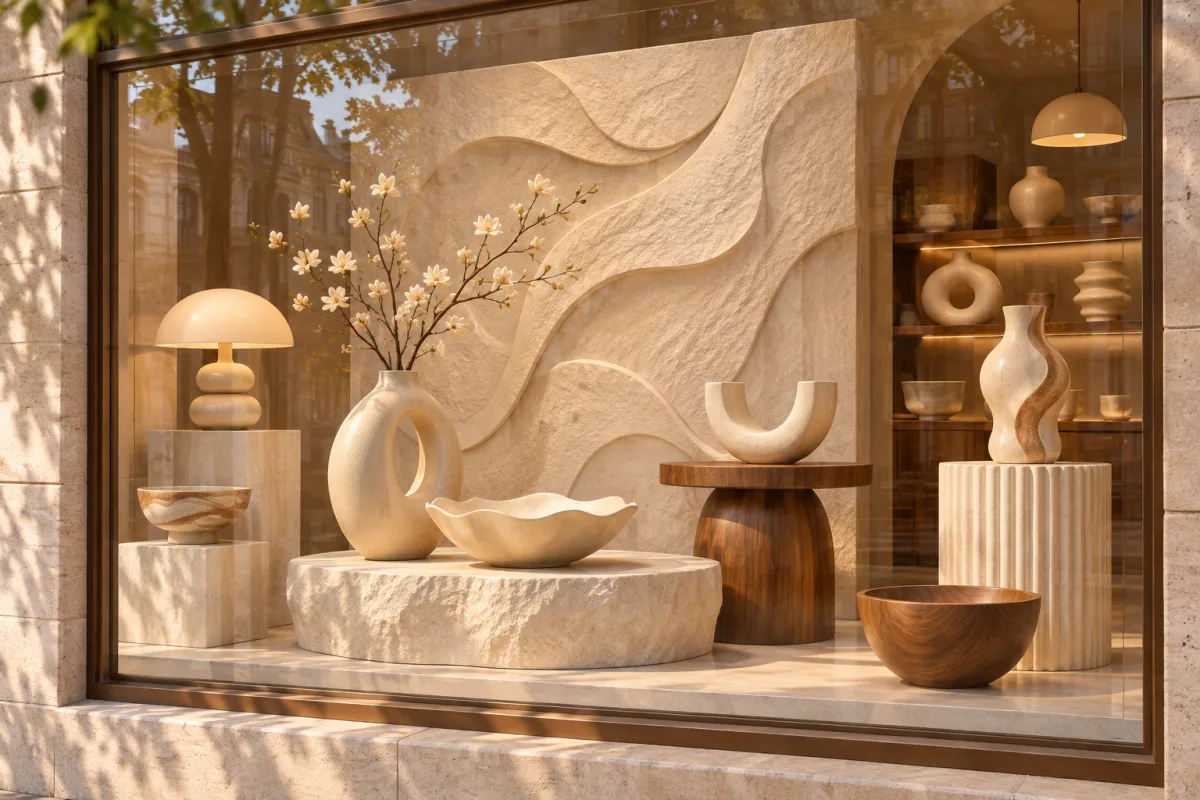
Map the display’s actual location, light exposure and access, then request product-specific suitability information. Judge the relief through the real glazing where possible. A convincing display concept is not evidence of heat, sunlight or exterior-use performance.
Clarify which side of the building envelope applies
State whether the panel is inside an enclosed conditioned space, in an unconditioned display zone or exposed outside. Do not use the word indoor as a substitute for describing actual conditions. Ask the project team to identify relevant exposure and operating conditions, and send that information to the supplier. If suitability remains unconfirmed, keep it open rather than assuming that glazing removes every environmental concern.
Review the relief through the glazing
Place a representative sample in the proposed position and examine it from the pavement or normal approach route. Reflections on the glass can reduce the visibility of texture, while internal lighting can create a different effect after dark. Record the viewing distances and angles that matter. WorkSafe Queensland’s reflection guidance is only a general visual-comfort reference; it does not assess shop-window performance or certify this material.
Keep merchandise and signage in the mock-up
A textured background should support the display rather than compete with the product being sold. Include the proposed merchandise outline and sign position when evaluating the panel. Check whether deep relief distracts from small objects or creates awkward gaps behind shelving. Avoid interpreting an empty architectural rendering as the final retail composition. The visual review should include the elements that customers will actually see together.
Plan access without claiming removability
Ask how staff will reach lights, clean the glazing and change the displayed merchandise. If the panel is fixed permanently, do not imply it can be removed repeatedly without damage. Have the responsible designer specify the support and access arrangement. A display supplier should confirm how equipment and shelving are supported independently where required. The decorative surface should not silently become the assumed load-bearing element.
Record appearance approval and technical conditions separately
Keep the accepted visual arrangement alongside the supplier’s model-specific application guidance. If the display moves closer to the glazing or lighting changes, review both again. Request actual finish and packing information before ordering, and keep the sample identity traceable. This approach allows a creative window concept while avoiding the unsupported claim that any PU texture is suitable for every storefront or exposure.
Before you request a quotation
- Describe actual exposure, not only indoor or outdoor.
- Review through the intended glazing and viewing angles.
- Include merchandise, signs and lighting in the mock-up.
- Keep technical suitability separate from appearance approval.
Frequently asked questions
Does glazing guarantee panel suitability?
No. The actual operating and exposure conditions still need review against the selected product’s guidance.
Can a window-display rendering replace a sample review?
No. It helps communicate intent, but glass reflections, real texture and the selected material’s application limits require separate checks.
Next step
Send Luvie a shop-window layout, intended panel position and the PU texture you prefer. Request model-specific application guidance before committing to the display design. Contact globalsales@luvieindustry.com or WhatsApp +86 19005833027 (https://wa.me/8619005833027).