Luvie Industry · 2026-11-06
PU Stone Samples in Brazil: Evaluate Relief and Finish
A PU stone-look sample can travel from a Brazilian distributor to an architect, installer and end customer before an order is placed. Without a simple loan record, the sales team may not know which finish was approved or whether the sample has been painted, cut or damaged. Sample control is a practical sales tool, not unnecessary administration.
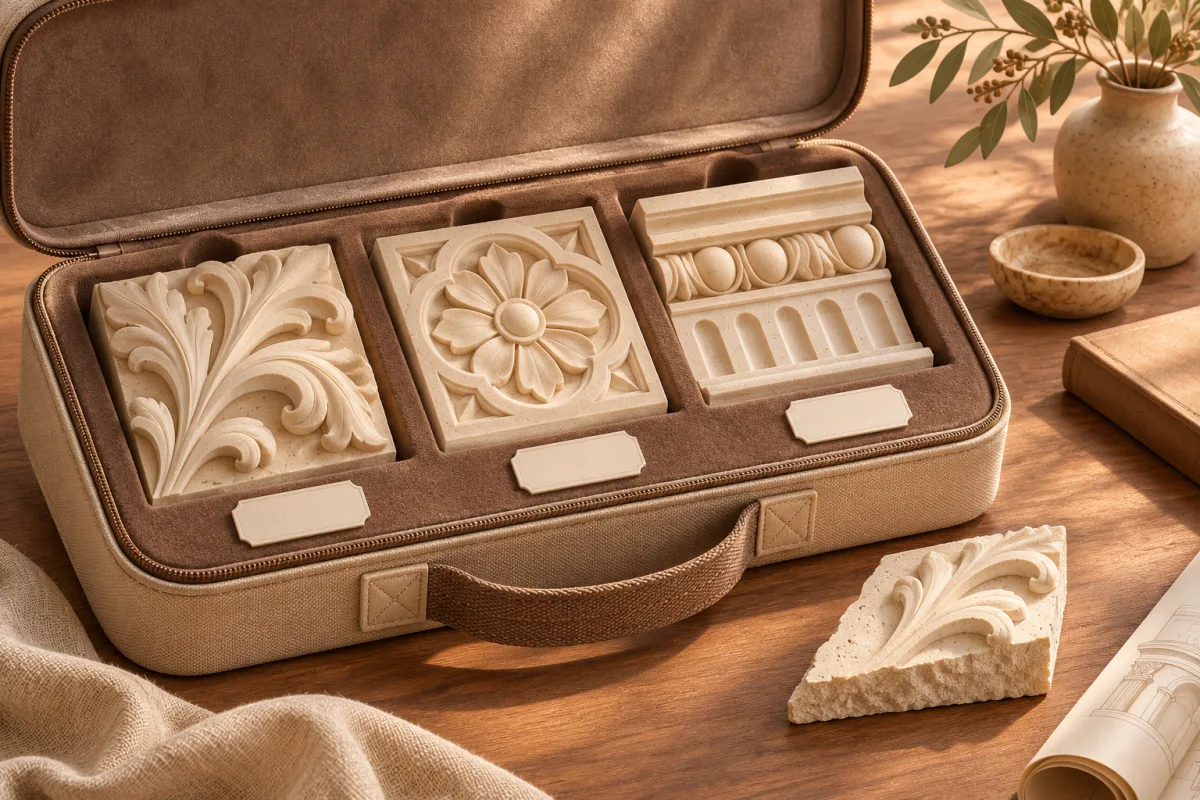
Give every loan sample an identity, purpose and return decision. Separate appearance approval from installation testing, and link the result to the quotation rather than relying on a verbal yes.
Inspect the relief, edge and repeating pattern
For a PU stone-look panel, the useful sample is not merely a colour chip. Request a piece large enough to show high and low relief, a finished face and an exposed edge, plus information about how the pattern repeats across full panels. Compare the sample under front lighting and the proposed side lighting without treating the resulting shadows as defects automatically. Ask how outside edges and joints are finished. If the installer intends to cut or coat a test piece, keep an untouched appearance reference separately. Record those trial conditions before a Brazilian buyer approves the decorative effect.
Use an identity that survives a conversation
Attach a removable or rear label that does not obscure the face, and link it to the supplier code, finish reference and dispatch photograph. Record the borrower, destination and purpose in your own sales system. Do not print unverified performance claims on the label. ISO’s quality-management guidance supports the importance of controlled processes in general, but an ISO certificate does not establish the sample’s product performance. The useful evidence here is the relationship between the sample, the approved description and the later order.
Collect a decision, not just a return parcel
Ask the borrower whether the finish is accepted, rejected or still under review, and record any conditions. A photograph of the sample next to the proposed paint can help explain the decision, but it should not replace the physical colour reference for a critical finish. If a trial uses a local adhesive or coating, record the exact trial materials and conditions and seek supplier guidance before generalising its result. A successful small trial is not a warranty for every wall, substrate or installation method.
Inspect and retire samples deliberately
On return, compare the sample with its original record. A cleaned, touched-up or repainted sample may no longer be a faithful sales reference, even if it looks attractive. Keep test samples separate and clearly identify their purpose internally. When a finish is revised or withdrawn, remove the old piece from the active loan stock. At quotation stage, cite the approved sample identity and any unresolved technical questions. This helps the Brazilian buyer move from visual preference to a meaningful procurement discussion without inventing guaranteed stock or matching future batches.
Before you request a quotation
- Record sample identity, borrower and intended decision.
- Separate untouched references from destructive test pieces.
- Capture acceptance conditions with the quotation.
- Retire altered or obsolete samples from sales use.
Frequently asked questions
Can a cut sample go back into the appearance display?
Only if its condition and identity remain suitable; otherwise keep it as a clearly identified technical example.
Does a successful adhesive trial prove universal compatibility?
No. The exact product, substrate, preparation and conditions matter, and written guidance is still needed.
Next step
Contact globalsales@luvieindustry.com or WhatsApp +86 19005833027 with the Brazilian buyer’s intended application and sample decision. Ask Luvie to identify the finish and technical questions that should accompany the sample request.