Luvie Industry · 2026-11-06
WPC wall-end returns: an Uzbekistan order checklist
WPC wall panel end returns in Uzbekistan deserve a separate line in the purchase brief. The centre of a fluted wall may be easy to approve, while a visible end beside a doorway exposes a hollow profile or an unfinished backing. Selecting an end treatment before ordering avoids relying on whatever trim happens to be available during installation.
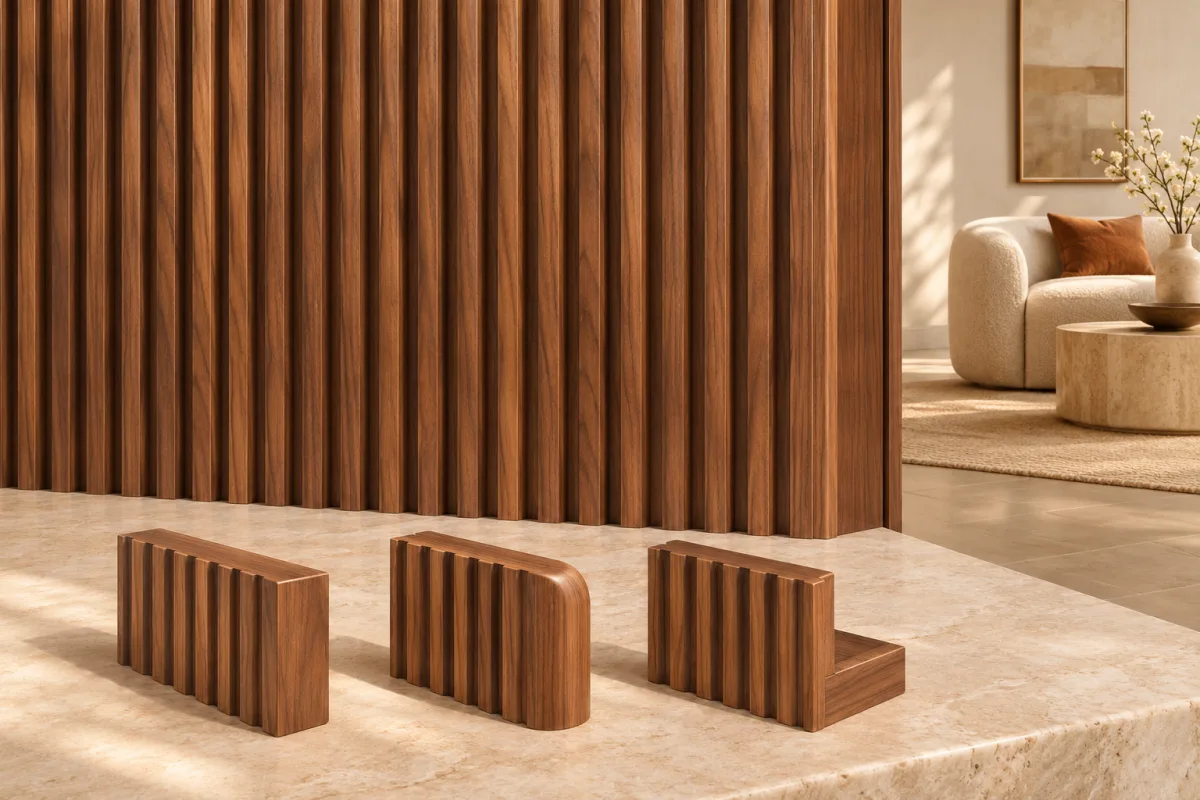
Identify every exposed termination on the wall elevation and compare compatible end caps, returns or purpose-designed profiles using the actual panel. Confirm dimensions, fixing method and appearance together; a similar colour alone does not establish compatibility.
Mark the ends that visitors will actually see
Prepare a simple elevation showing open wall ends, changes in wall depth, doorway edges and the start of each fluted run. Add viewing directions from the entrance and adjacent seating. A termination hidden behind furniture today may become visible after a layout change. Ask the designer which edges need a finished return and which meet another permanent finish. Do not count all wall boundaries as the same detail.
Measure the complete build-up
The relevant depth can include the panel, support system and any approved installation layer. Request the selected profile’s drawing and a sample of the proposed end piece. Check whether the trim covers the real cut edge without obstructing the intended joint or movement provision. Do not order a trim solely from the panel’s nominal thickness. The installer should confirm how wall irregularities and support tolerances affect the visible result.
Compare appearance at the final viewing angle
A cap with a different sheen can look acceptable face-on but conspicuous from the side. Review the sample in the orientation it will be used, including its top and bottom ends. If a return is fabricated from the same decorative panel, agree how the corner and cut surface will be finished. A drawing should distinguish a proposed fabrication method from a supplier-approved detail; the two are not interchangeable.
Keep accessory identity separate from finish shorthand
Record the accessory’s own model and finish reference alongside the panel code. GS1’s product-change principles illustrate why a replacement item should not quietly inherit an old identity when its relevant attributes change. Your internal schedule can be simpler, but it should still preserve compatibility decisions. A new end-cap generation may fit differently even if the sales name remains familiar. Ask for change notification on the specific ordered combination.
Order a trial junction before the full accessory quantity
Use a short mock-up to review fixing access, visible joints and the transition to the neighbouring finish. Once accepted, count accessories from the elevation, including lengths, cuts and approved spare requirements. Explain whether the supplier, fabricator or installer supplies each component. Keep a photograph and marked drawing with the quotation so later staff do not substitute an ordinary edge strip for the agreed return.
Before you request a quotation
- Mark all exposed ends and viewing directions.
- Confirm complete build-up and actual accessory dimensions.
- Approve a joined panel-and-return sample.
- List accessories by model, length and responsibility.
Frequently asked questions
Will any colour-matched cap fit?
No. Colour is only one variable. Check geometry, covering depth, joint clearance and the approved fixing method using the actual components.
Should the return be ordered with the panels?
Coordinate both in the same specification review. Commercial availability and quantities still need confirmation, but the detail should not be left unresolved.
Next step
Send Luvie a marked wall elevation, the preferred WPC profile and photographs of the exposed wall ends. Request a compatible accessory proposal rather than only a panel price. Contact globalsales@luvieindustry.com or WhatsApp +86 19005833027 (https://wa.me/8619005833027).