Luvie Industry · 2026-11-06
PU Stone Retail Walls in Chile: Plan Display Changes
Retail displays change faster than many wall finishes. A Chilean store that chooses PU stone-look cladding should plan how shelves, signs and promotional fixtures will be moved without treating the decorative surface as an all-purpose support. The useful procurement question is not simply whether the wall looks good on opening day, but how it will be managed afterward.
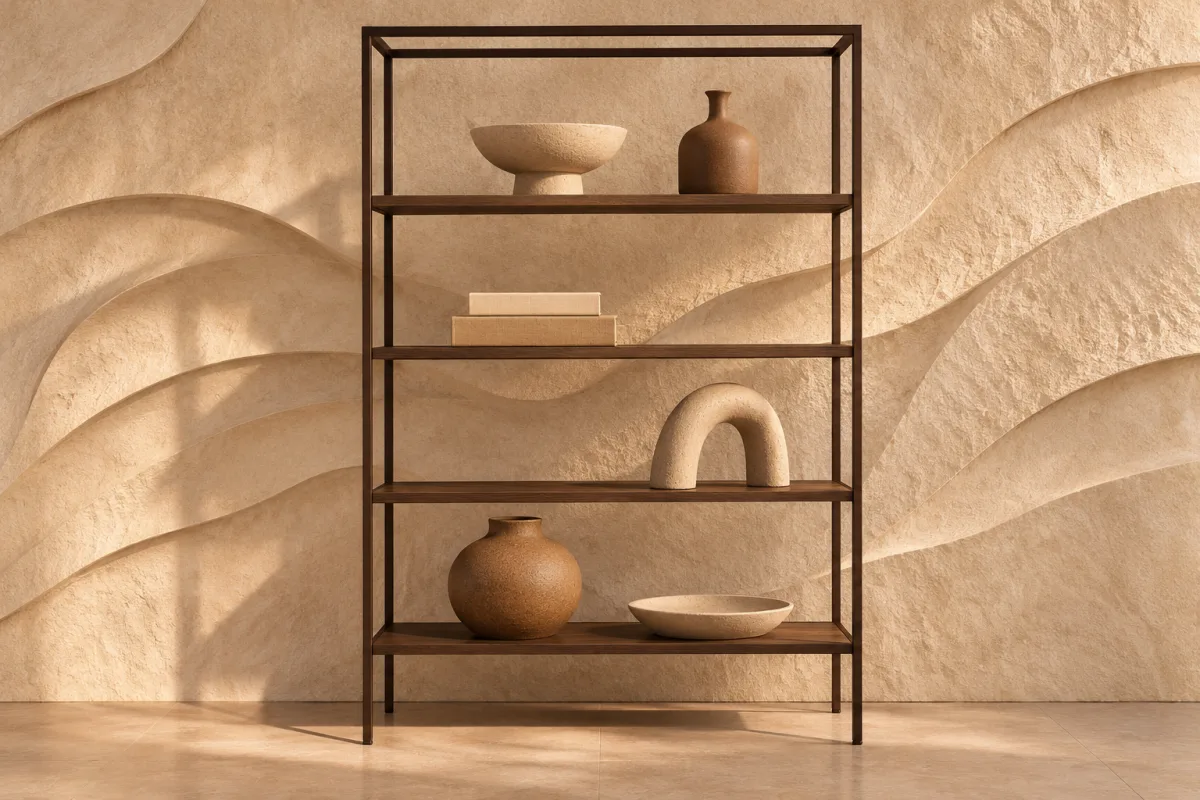
Separate decorative cladding from the fixture support system. Agree access, replaceable areas and a record of approved fixing positions before the wall is ordered.
List the fixtures that are likely to change
Ask store operations which elements move seasonally: signage, rails, display shelves or lighting accessories. Record their intended positions and identify the ones that require structural support. Do not infer load capacity from a stone-like appearance or from the weight of a small sample. The fixture designer should specify a suitable support and fixing method into verified construction. The panel supplier can provide information on the decorative material, but it cannot replace the project’s assessment of fixture loads or the supporting wall.
Create deliberate interfaces instead of random holes
Consider a coordinated rail, separate mounting zone or other designed interface that allows changes without repeatedly drilling arbitrary points through the decorative face. Have the responsible designer assess the solution. Show how the panel ends around that interface and whether any cut face needs a compatible finish. A representative mock-up should include the actual fixture connection and panel relief. This reveals conflicts between bracket plates and uneven decorative texture before the store team is forced to improvise during an overnight display change.
Record the approved configuration
Keep the panel code, finish reference, fixing-zone drawing and approved accessory details in one store file. Photograph the finished arrangement for internal maintenance use, without presenting it as evidence for unrelated applications. ISO quality-management guidance describes controlled organisational processes; it does not certify this wall assembly or its fixture capacity. If the store changes the support arrangement later, treat that as a new technical review. An original visual approval should not be interpreted as permission to attach any future fixture wherever convenient.
Budget for replaceable sections and realistic repairs
Ask how damaged decorative pieces can be removed and which neighbouring areas may be affected. Keep identified spares where practical, but confirm availability rather than promising indefinite matching stock. Request product-specific repair guidance and establish when replacement is preferable to touch-up. Include interfaces and edge details in the quotation so the wall is not priced as an uninterrupted sheet of decoration. This approach gives the retailer a realistic operational plan while keeping unsupported claims about impact resistance, repair invisibility or structural capacity out of the sales discussion.
Before you request a quotation
- List changing fixtures and their support requirements.
- Design mounting interfaces independently of decoration.
- Keep an approved fixing-zone and product record.
- Confirm repair, replacement and spare-material options.
Frequently asked questions
Can shelves be attached anywhere on the decorative panel?
No. Their support and fixings require an appropriate verified construction and design.
Will touch-up always be invisible?
No. Ask for the product-specific method and evaluate appearance before accepting a repair approach.
Next step
Share your Chile retail elevation and planned fixture changes with globalsales@luvieindustry.com or WhatsApp +86 19005833027. Ask Luvie for PU stone-look sample and edge information to coordinate with your fixture designer.