Wall Panel Sample Checklist Before Mass Production
A wall panel sample should help your team answer two commercial questions: will local customers want this product, and can the approved look and structure be repeated in a bulk order?
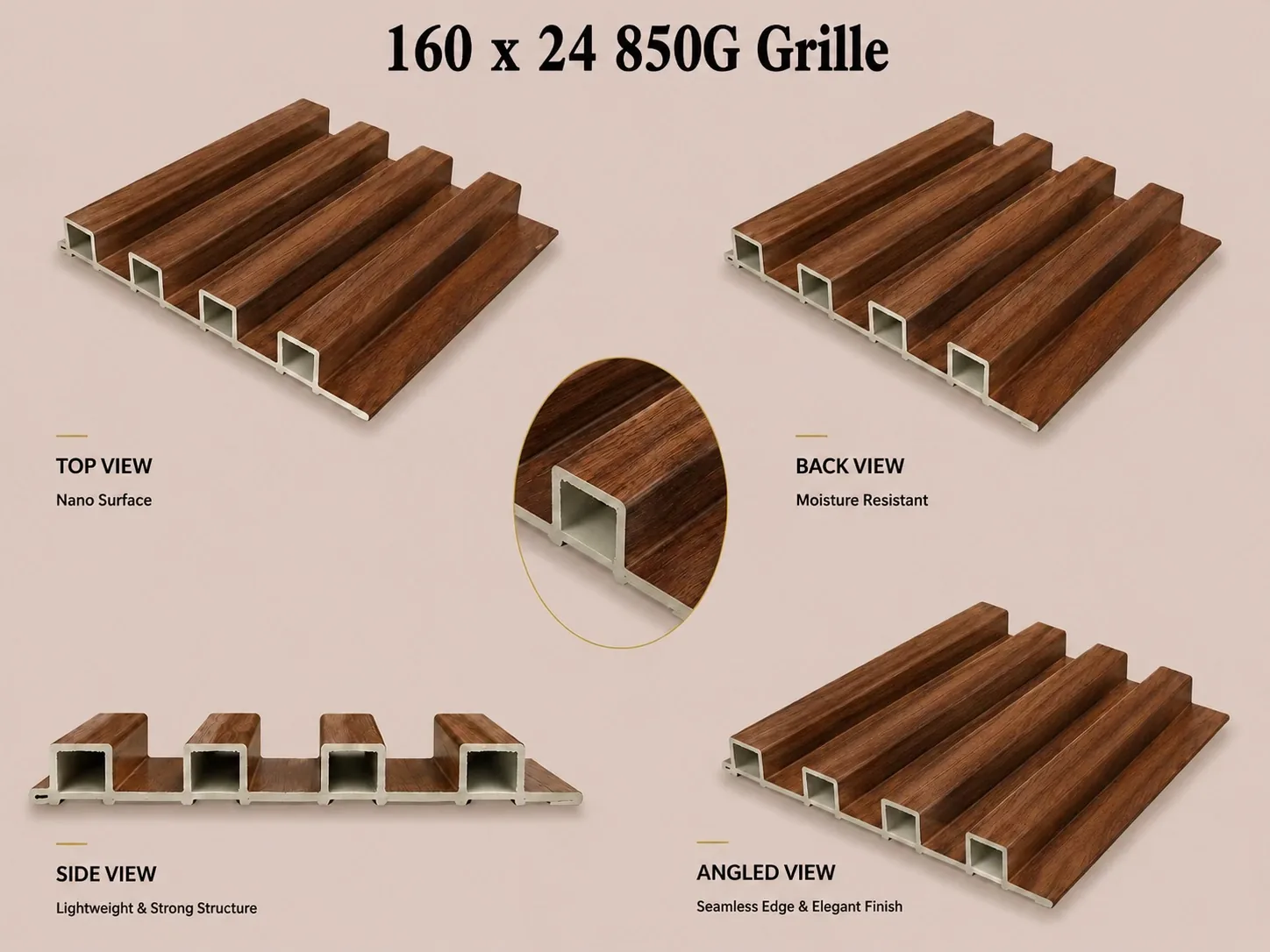
Evaluate samples in the same way your customer will experience the product: look at the full surface under realistic light, handle the panel, test the joint and trims, compare it with competing materials, and decide where it fits in your product range. Then keep the approved physical sample as the reference for the order.
Why the right sample can improve local sales
A catalog helps buyers narrow the range, but decorative wall panels are tactile and visual products. Customers want to see the real texture, reflectivity, profile depth and edge finish. Installers also want to understand how panels connect and how corners are completed.
A useful sample program therefore supports showroom presentation, installer feedback and purchasing control at the same time.
Start with the customer and application
Before comparing colors, define who will buy the product. A practical bathroom renovation range may prioritize easy-clean surfaces and coordinated trims. A hotel or retail feature wall may need deeper texture and stronger visual impact. A distributor serving rental properties may value reliable fast-moving finishes and simple installation.
When samples are linked to a clear customer type, it becomes easier to decide which designs deserve inventory and which should remain project-order options.
What should you examine on a wall panel sample?
1. Surface appearance
View the panel from close range and from the normal distance used in a room or showroom. Check print clarity, texture, gloss, repeating patterns, scratches and edge finish. Compare several pieces where possible rather than judging one small swatch.
2. Profile and construction
Review width, thickness, internal structure, rigidity, weight and cutting behavior. Similar-looking panels can feel very different when handled or installed.
3. Joint and accessory fit
Connect sample pieces and test the matching trims, corners or clips. Customers judge the completed wall, not the panel alone. Color or dimensional mismatch between panels and accessories can reduce confidence quickly.
4. Realistic lighting
Wood grain, marble film and high-gloss surfaces can change under warm, cool and natural light. Review samples in conditions similar to the intended showroom or project.
5. Packaging and labeling
For distributors, the carton is part of the product. Ask how surfaces, corners and long edges are protected and whether model, color, quantity and brand information are easy to identify.
Turn samples into a clear showroom range
A strong first collection does not need every available design. Combine a small group of dependable neutral finishes with several higher-impact options. Show related panels together with trims, installation pieces and room images so customers can understand the final result.
| Sample group | Role in the range | What to show |
|---|---|---|
| Fast-moving basics | Entry renovation and repeat retail sales | Neutral colors, simple profiles, matching trims |
| Design upgrades | Feature walls and higher-value projects | Wood grain, fluted profiles, premium textures |
| Project options | Hotels, offices and custom orders | Large samples, application images, documented specifications |
How to approve a sample for production
Keep the approved physical panel, identify the model and finish, take clear photos, and connect it to the written product specification. Digital photos are useful for communication, but screen color should not replace the retained physical reference.
For repeat orders, keep records of the approved range and discuss how new production will be reviewed against it. This creates a more useful commercial standard than an informal message saying only “same as sample.”
How Luvie supports sample selection
Luvie helps importers and distributors review PVC, WPC, fluted, UV board, PU stone and SPC options as a coordinated product range. Buyers can discuss target customers, applications, preferred price tier, accessories and mixed-product planning before selecting samples.
Sample availability, courier arrangements, specifications and production requirements are confirmed for the selected products.
Frequently asked questions
Is one small swatch enough?
A swatch helps with color and texture. A profile section, multiple surface pieces and matching trims provide a more complete evaluation.
Should installers review samples?
Yes. Installer feedback can reveal joint, trim, cutting and substrate questions before the product is introduced to customers.
Can a sample guarantee zero color variation?
No decorative manufacturing process should be sold as guaranteeing zero variation. Agree on the physical reference and practical acceptance criteria.
Can samples include several product categories?
A coordinated discussion can include PVC, WPC and related accessories. The feasible sample set depends on product size and courier arrangements.
Tell us what your customers are looking for.
Share your country, customer type, applications and preferred styles. Luvie will help organize a practical product and sample discussion.
WhatsApp +30 6947135317