Luvie Industry · 2026-11-06
PU Stone Panels to Peru: Build the Product Dossier
Stone-look is an appearance description, not a complete customs description. A Peruvian importer considering PU decorative panels should give the broker factual product information before relying on an assumed classification or tax estimate. The aim is a consistent dossier that helps the responsible professional assess the actual goods, not a self-issued legal conclusion from a marketing name.
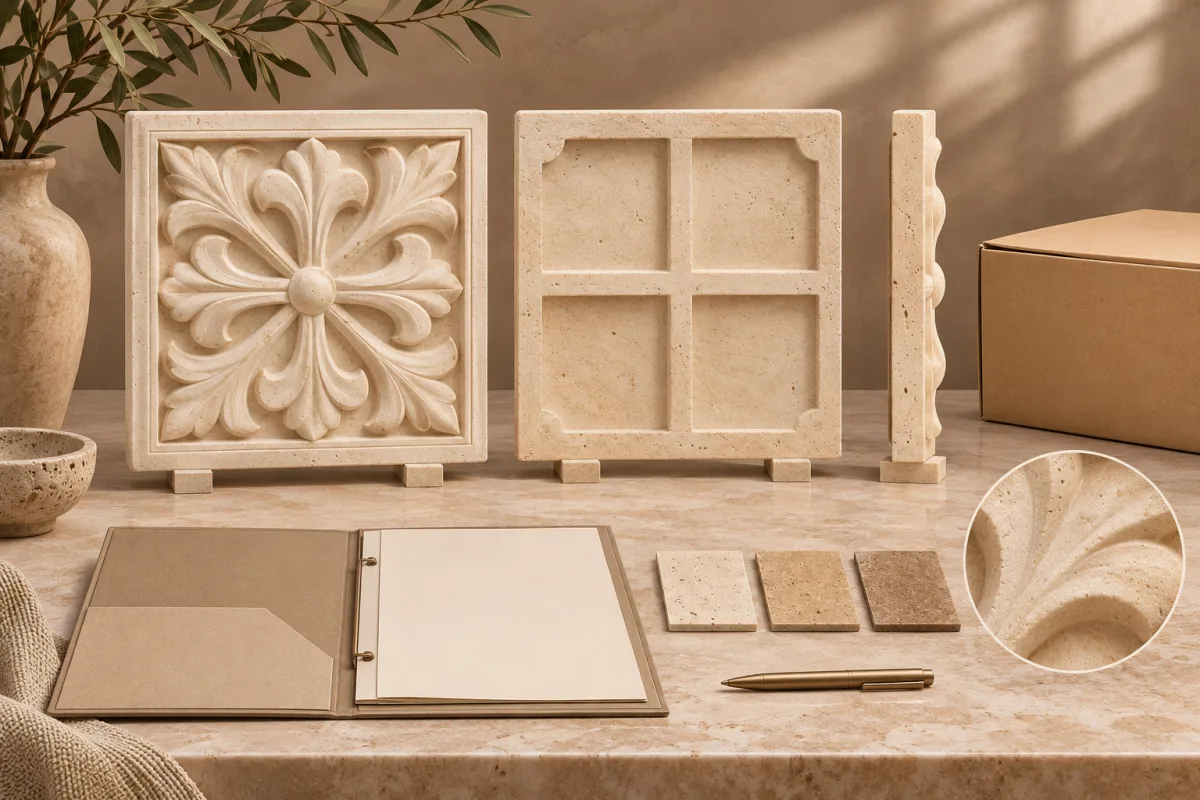
Separate material composition, construction, intended use and decorative appearance. Ask the supplier for supporting information, then have your Peruvian broker confirm classification and current requirements for the exact shipment.
Describe what the panel is, not only what it resembles
Record the supplier’s product code, declared material construction, dimensions, unit weight and intended decorative use. Ask for clarification if PU is used loosely in a commercial description or if several materials form the product. Include photographs of the front, back and edge. Do not call the product natural stone merely because the surface imitates it. Equally, do not guess a precise composition from a photograph. The supplier should identify the actual product, and any uncertainty should remain visible in the dossier.
Make the commercial documents tell the same story
Compare the proposed invoice description, packing list and technical information before shipment. The level of detail may differ between documents, but their identities and quantities should not conflict. Keep sales names linked to a stable product code and record the units used for pieces, cartons and area. If corner pieces or accessories are supplied, identify them separately where appropriate. Ask the broker what information is needed for the declaration rather than assuming a generic line such as building materials is sufficient for the specific consignment.
Leave classification and obligations to the responsible review
SUNAT describes importation for consumption as involving applicable duties, taxes, formalities and other obligations, with goods nationalised upon release. That overview does not determine the tariff treatment of this panel. Ask the broker to assess the current classification and documentary requirements using the complete information. Do not copy a tariff code from another supplier’s listing or from a visually similar natural-stone product. Record the professional advice and any remaining questions before calculating the order’s landed-cost scenario.
Preserve the dossier through receiving
Keep the final approved description with the order, sample reference and shipment records. At receiving, compare labels and visible construction with the ordered identity and report discrepancies through the agreed process. If the supplier proposes a material or construction change on a later order, send the revised information for review instead of assuming the earlier assessment remains valid. This does not require publishing private commercial documents; it requires a reliable internal record that supports purchasing, customs coordination and after-sales discussions.
Before you request a quotation
- Obtain factual material, construction and product identifiers.
- Reconcile invoice and packing-list descriptions.
- Have a Peruvian broker verify current treatment.
- Review later material changes rather than reusing assumptions.
Frequently asked questions
Can I use the natural-stone tariff code for a stone-look panel?
Do not assume that. Classification depends on the actual goods and should be checked by your broker.
Does a supplier’s suggested code settle the import treatment?
No. It is information to review, not a substitute for the importer’s responsible customs assessment.
Next step
Request a factual PU panel description and packing information from globalsales@luvieindustry.com or WhatsApp +86 19005833027. Share them with your Peru broker before finalising the import plan; Luvie’s product information is not a customs ruling.