Luvie Industry · 2026-11-06
PVC Panels in Colombia: Build a Dealer Demonstration
A Colombian distributor can improve the quality of dealer conversations by demonstrating how a PVC panel system is identified and assembled. However, a quick showroom demonstration should not become an improvised installation standard. The useful training session shows what buyers need to check and which questions must go back to the supplier or qualified installer.
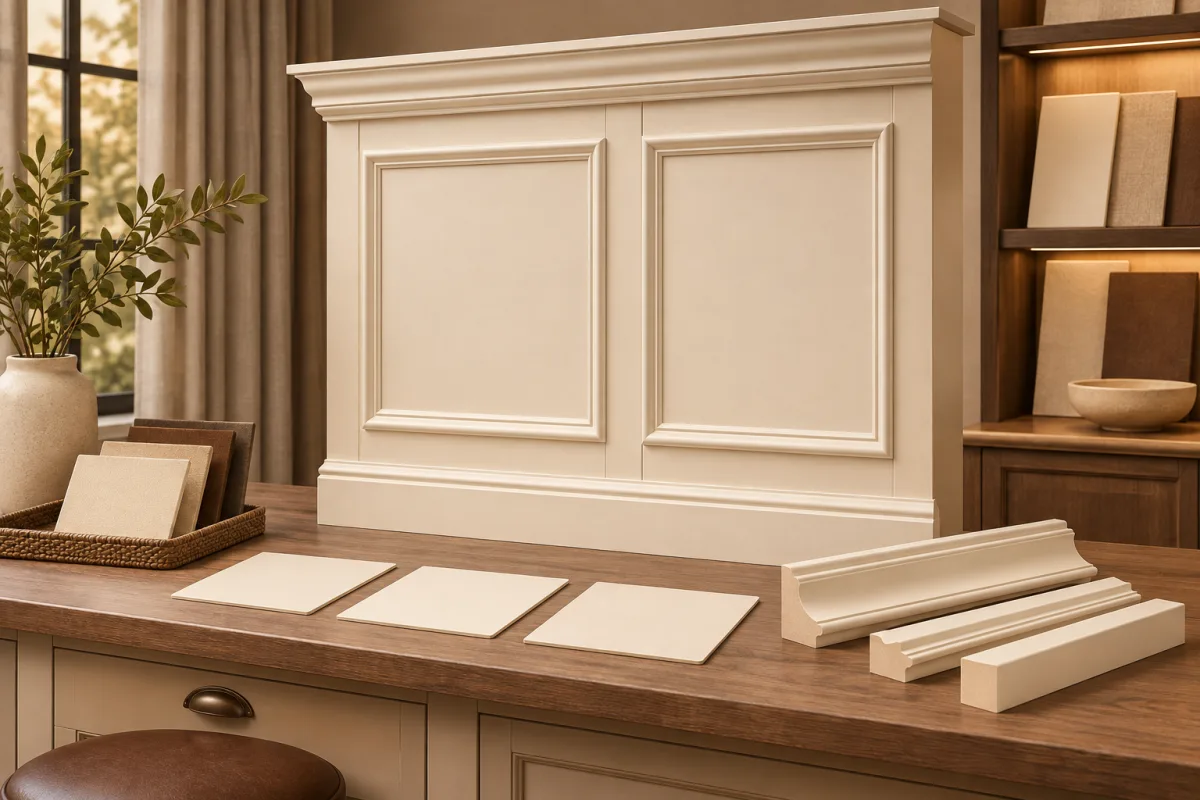
Use the exact product and current instructions, demonstrate a limited defined task, and record what the demonstration does not prove. Keep sales training separate from project-specific installation approval.
Choose one useful learning outcome
Instead of trying to teach every possible installation in one session, focus on a defined task such as identifying the matching trim, understanding connected coverage or checking the product label. Prepare the relevant sample pieces and instructions in Spanish. Explain whether the pieces are current saleable products or older examples. A dealer should leave able to ask a more accurate procurement question, not believing that a short demonstration makes every substrate, adhesive or wet-area application acceptable. Keep uncertain points visible rather than filling gaps with confident guesses.
Build the demonstration from a controlled specification
Match the panel, accessories and any demonstration materials to the supplier’s documented guidance. If the demonstration uses an alternative component, clearly identify it and obtain appropriate confirmation before treating it as compatible. Keep a record of the version shown to dealers. ISO quality-management-system guidance concerns controlled processes; it does not certify the demonstration assembly or establish product performance. Do not display a supplier certificate as a substitute for the actual installation information that the dealer needs to pass on to a customer.
Show limitations as part of the lesson
A connected sample can explain a joint, but it cannot prove long-term durability, fire behaviour or suitability for all walls. A neat cut on a small offcut does not establish a safe work method for every tool or site. Follow applicable safety procedures and the equipment instructions for any practical activity. Explain when the installer must assess the substrate, service penetrations or environmental conditions. This honest boundary makes the training more useful because dealers learn which promises they should not make from a showroom example.
Give dealers a follow-up record they can use
Provide a short product-identification sheet, links to the current product and catalog information, and a list of questions to collect from buyers. Record recurring confusion, such as nominal width versus connected coverage, and improve the next session around it. Retire outdated demonstration pieces when the product changes. Ask dealers to send project drawings or photographs with inquiries rather than only a desired colour. The aim is a more complete sales handover that reduces ambiguity while avoiding invented performance, stock or delivery commitments.
Before you request a quotation
- Define one clear learning outcome for each session.
- Use identified products and current instructions.
- Explain what the demonstration does not prove.
- Provide a Spanish follow-up checklist and document links.
Frequently asked questions
Can a showroom demonstration replace installer training?
No. It can explain a limited task, but site-specific work and safety require the appropriate competence and instructions.
Should a dealer promise suitability after seeing a joint sample?
No. The proposed application and complete installation must still be checked.
Next step
Send your Colombia dealer training questions to globalsales@luvieindustry.com or WhatsApp +86 19005833027. Ask Luvie for identified sample and document information to build an accurate demonstration with your installation team.