Luvie Industry · 2026-10-25
PU stone panels in Uzbekistan: approve a multi-panel seam mockup, not one small sample
A small PU stone-effect sample shows texture and colour, but it cannot show how repeated panels meet across a wall. An importer preparing a showroom or project in Uzbekistan should resolve visible joints before ordering the full quantity. The useful question is not simply whether the supplier calls a finish seamless. It is what joint appearance the actual panel system can deliver under the project’s viewing conditions.
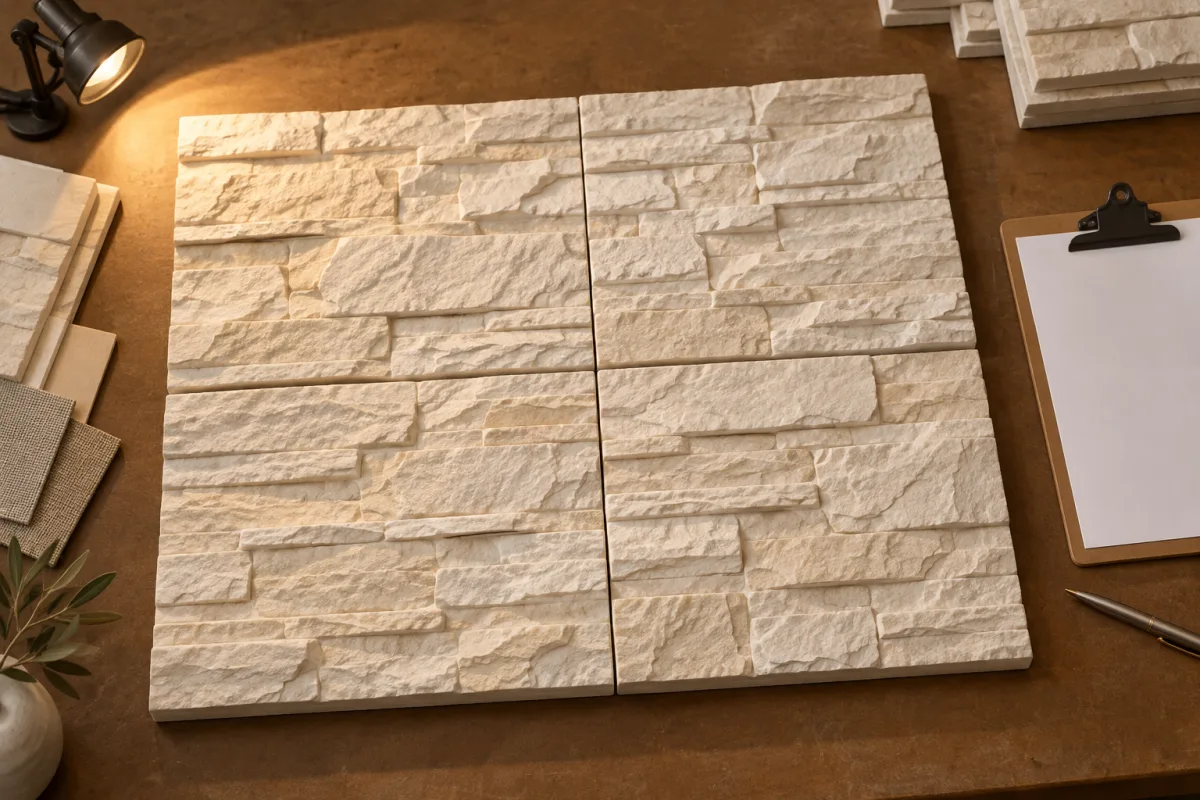
Request a mockup that includes both horizontal and vertical joints, relevant edges and the intended finish. Agree the method and viewing conditions, record acceptance and preserve the approved reference. Do not infer invisible joints from a cropped catalogue image.
Choose a layout that exposes the difficult joints
Use enough full panels to show the relevant joint directions and pattern repetition. Include an end condition or opening when it changes the appearance; do not approve only the easiest uninterrupted section. Ask whether panels have a prescribed orientation or sequence. For a Tashkent showroom, mark the entrance viewing direction and intended display lighting on the brief. The layout is an approval tool, not evidence that a particular installation method is suitable for every substrate.
Confirm the finishing method for the exact product
Ask whether the selected panel uses a visible joint, an interlocking edge, a finishing compound or another documented detail. Orac’s FAQ gives different seam advice for different panel patterns, illustrating why one generic filler instruction is unreliable. Its products and materials are not Luvie’s installation specification. Obtain the proposed system’s instructions and confirm compatible finishing materials with its supplier. Do not promise an invisible joint or paint compatibility without supporting product information.
Review under agreed lighting and viewing conditions
Examine the mockup with the intended light direction as well as a normal front view. Grazing light can make a joint more noticeable; a close-up phone photograph is not a complete acceptance method. Agree the viewing position and which visible features are acceptable before approval. Record raised edges, interruptions in the stone pattern and differences in finish separately, so the team knows whether to revise alignment, material selection or the finishing process. Do not invent a universal numerical tolerance.
Turn the approved mockup into a controlled reference
Record panel codes, orientation, finishing materials, substrate description, lighting and the approval date. Keep overview and detail photographs and, where practical, retain the physical mockup. State what remains excluded, such as performance testing or suitability of another substrate. Use the reference when reviewing the first installed area and future deliveries. If the panel, finish or method changes, seek a new approval rather than relying on a photograph of the earlier version.
Before you request a quotation
- Both joint directions and relevant edges represented
- Exact panel orientation and finishing instructions
- Agreed lighting, viewing and appearance criteria
- Signed reference with changes and exclusions recorded
Frequently asked questions
Can one small sample prove the wall will look seamless?
No. It does not show adjacent edges, pattern repetition or the finishing method.
Should every joint use the same filler?
No. Use only the method confirmed for the selected panel and finish; another brand’s advice is not transferable.
Next step
Send Luvie the PU reference and intended Uzbekistan display or project layout. Request full-panel samples and current joint guidance before approving the purchase and installation mockup.