Luvie Industry · 2026-11-06
PVC Panels to Peru: Prepare for LCL Unpacking
A Peruvian buyer placing a smaller PVC wall-panel order may consider less-than-container-load shipping. The important question is how the packed goods will be handled through consolidation, deconsolidation and final delivery. A quotation that names a sea route does not by itself explain these handovers or confirm that long cartons will reach the warehouse in a manageable form.
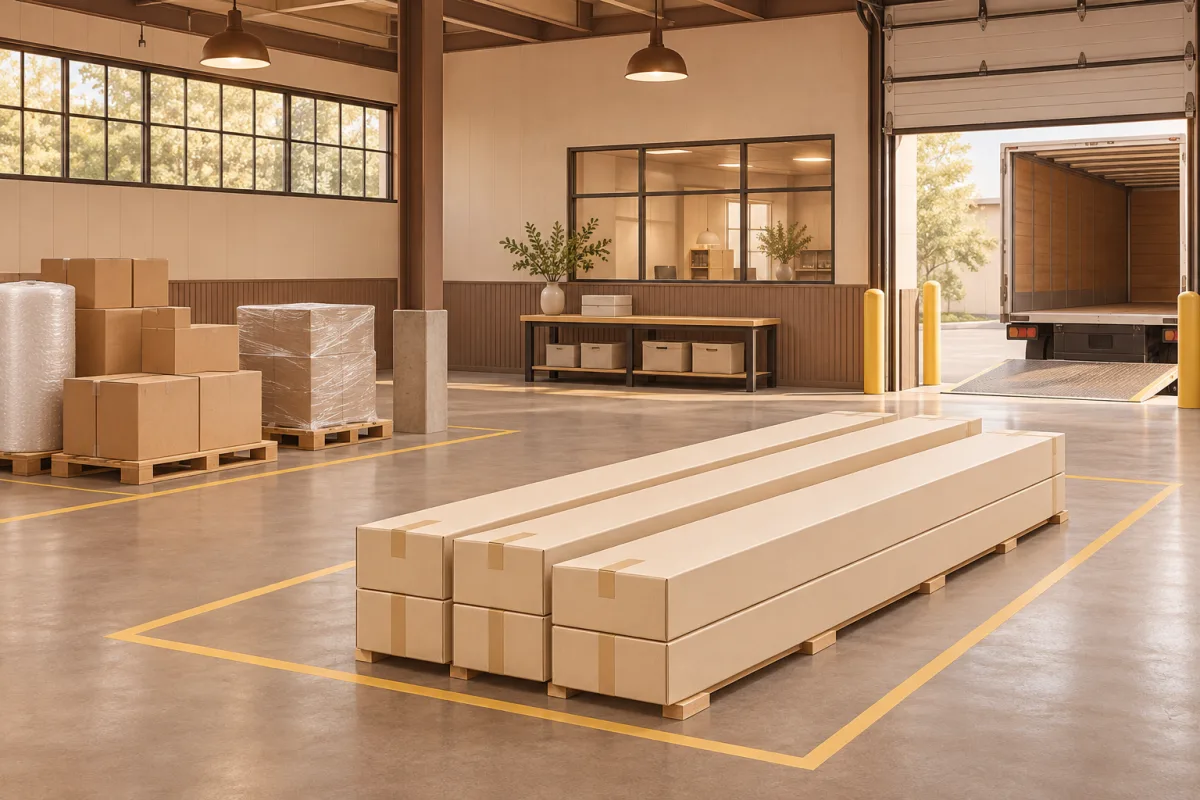
Review the complete handling chain with the forwarder and supplier. Match packaging, identifiers and receiving instructions to the actual shipment rather than assuming an LCL service behaves like a sealed full container.
Describe the cargo before requesting the route
Give the forwarder confirmed package dimensions, weights, quantity and material description. Identify long or awkward packs and ask what handling and acceptance conditions apply. Do not provide guessed figures merely to obtain an attractive freight estimate. Request the intended delivery point and the services included in the quote, with any uncertain charges identified for confirmation. The IMO CTU Code offers general guidance on packing and handling across intermodal transport; it does not prescribe a universal packaging method or price for PVC panels.
Make package identification independent of outer grouping
If cartons are grouped on a pallet or in a bundle, ask how each individual package remains identifiable when the group is opened. Link package numbers to the packing list and keep the product and batch reference readable. Accessories should have their own count and description rather than being loosely included with panels. Discuss whether the forwarder expects any repacking and who is authorised to perform it. A photograph of the original load is useful evidence of its starting condition, but not proof that every later handover is damage-free.
Plan the Peruvian receiving appointment
Confirm who will receive the delivery, what unloading equipment is available and where long packs can be placed safely. Ask the forwarder what condition and quantity records are needed if discrepancies are found. Keep inspection safe and do not break carrier procedures or discard packaging before the issue is documented. Record package identifiers and affected quantities, not only a close-up photograph of a damaged edge. Customs release and commercial delivery are separate milestones; the importer and broker must verify applicable Peruvian formalities for the exact shipment.
Reconcile the shipment before distributing stock
Compare received cartons and accessory packs with the final packing list, then record opened packs and any quarantined material. Do not immediately split uncertain stock among several customers, because that makes investigation harder. Preserve the supplier’s handling and storage instructions for the warehouse team. If future shipments use a different consolidator or package format, review the process again rather than assuming the first shipment established a permanent solution. An LCL plan is useful only when the buyer understands each handover and the evidence needed at arrival.
Before you request a quotation
- Confirm dimensions and weights before freight quotation.
- Keep each carton identifiable outside its pallet group.
- Book appropriate unloading and receiving resources.
- Reconcile damage and quantity before onward distribution.
Frequently asked questions
Is LCL always unsuitable for long panels?
Not necessarily. Ask the forwarder to confirm acceptance and handling for the actual packed dimensions.
Does a packing photograph replace receiving inspection?
No. It records one stage; receiving checks establish the condition and quantity at arrival.
Next step
Send your Peru delivery location and proposed panel and accessory quantities to globalsales@luvieindustry.com or WhatsApp +86 19005833027. Ask Luvie for confirmed packing information to review with your chosen forwarder.