Luvie Industry · 2026-10-19
Can PVC wall panels cover a damp wall?
A customer sends a picture of a stained wall and asks for waterproof PVC panels. The finish may be easy to select, but the photograph does not tell the distributor whether the wall is ready to receive it. In a humid South American apartment or a Gulf renovation, the useful first step is a site review, not a promise that cladding will solve dampness. This buyer checklist separates the building repair from the decorative material order.
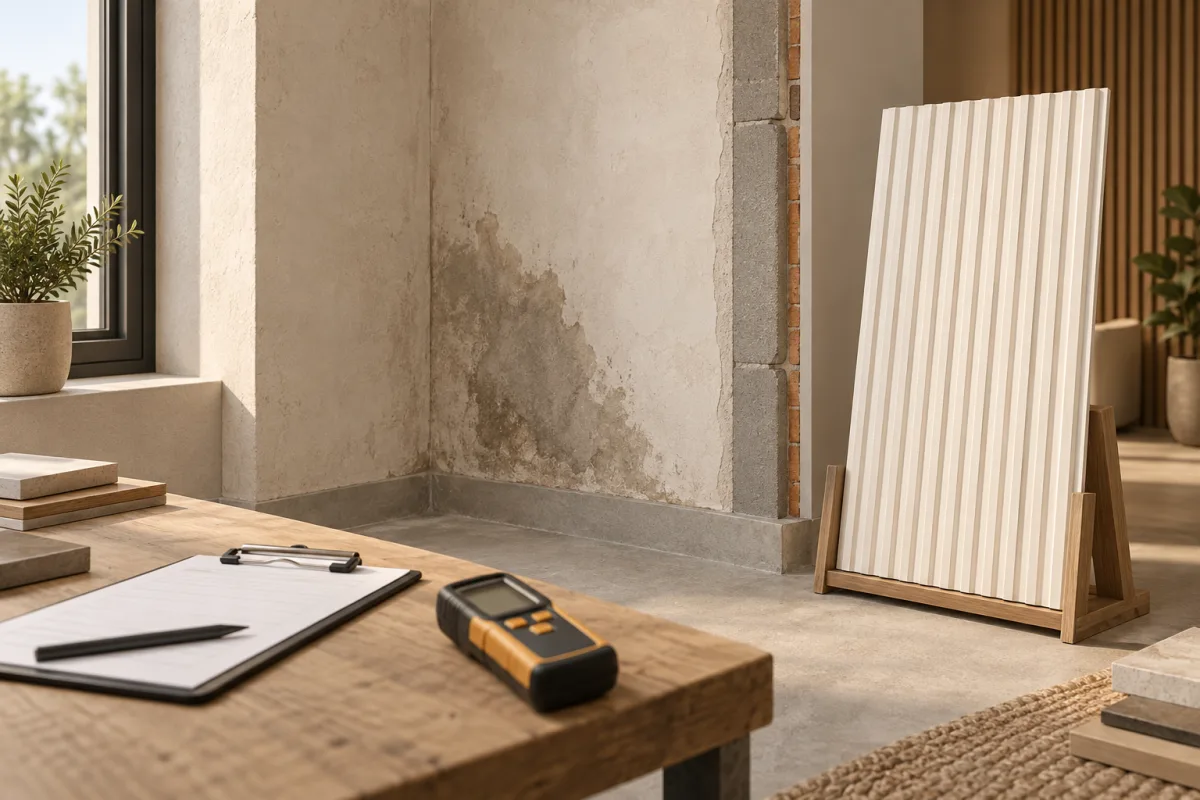
Do not use decorative panels to conceal an unresolved moisture or mold problem. Ask the responsible building professional to identify and address the cause, then approve the substrate against the selected installation system before releasing the work.
Separate the finish specification from the moisture investigation
Water resistance of a panel is not a diagnosis of the wall behind it. The EPA guidance emphasizes moisture control and warns against simply coating moldy surfaces. For a purchase decision, treat that as a reason to obtain a site assessment, not as a certification of any cladding. Ask when the stain appears, whether a leak has been repaired and who is responsible for investigating concealed areas. Do not identify mold or prescribe treatment from a sales photograph. Suspected concealed contamination or extensive damage calls for an experienced professional.
Prepare a useful site brief instead of a vague waterproof request
Send the installer a wall location plan, substrate description, photographs and the available repair records. Distinguish an exterior-facing wall from an internal partition and note plumbing or cooling services nearby. Record room use and any periods without climate control. These observations help the project team investigate; none proves that one specific cause is present. Keep unresolved questions visible in the quotation. If the site has not been accepted, describe the material offer as subject to technical approval rather than giving an unconditional installation recommendation.
Agree on the acceptance evidence before covering the wall
Ask the selected panel and adhesive suppliers which substrate requirements apply, and ask the project team to define the appropriate inspection or measurement method. A generic meter reading or a wall that feels dry is not a universal acceptance criterion. Record who performs the check, where it is taken, the applicable limits and the result. Confirm that any repaired coating or base is sound and compatible with the intended fixing system. Do not transfer moisture limits from flooring, another adhesive or an unrelated panel model.
Keep procurement and installation release as separate decisions
A distributor can arrange finish samples while the site investigation continues. However, cutting or covering the wall should wait for the responsible team’s acceptance. Make the order file include the product reference, proposed fixing, repair record, acceptance decision and any remaining exclusions. If a customer asks whether an air gap automatically solves the problem, request a designed assembly rather than improvising a cavity. If stains return before installation, reopen the review. A small first-area mock-up can check appearance and workmanship, but it does not replace moisture investigation or prove long-term performance.
Next step
Use the catalog to shortlist a finish, then send the wall brief and selected model for a suitability discussion. Keep the building repair and substrate approval documented separately from the purchase of decorative panels.