Luvie Industry · 2026-10-19
Will your wall panel adhesive still be usable when the project starts?
Panels may wait for a phased fit-out, but the adhesive ordered with them has its own storage conditions and usable life. A distributor shipping to Brazil, the Gulf or an inland destination such as Uzbekistan should compare the accessory timeline with the installation schedule before buying. This is a purchasing workflow, not a recommendation of a particular chemical or a promise that an adhesive is compatible with Luvie panels.
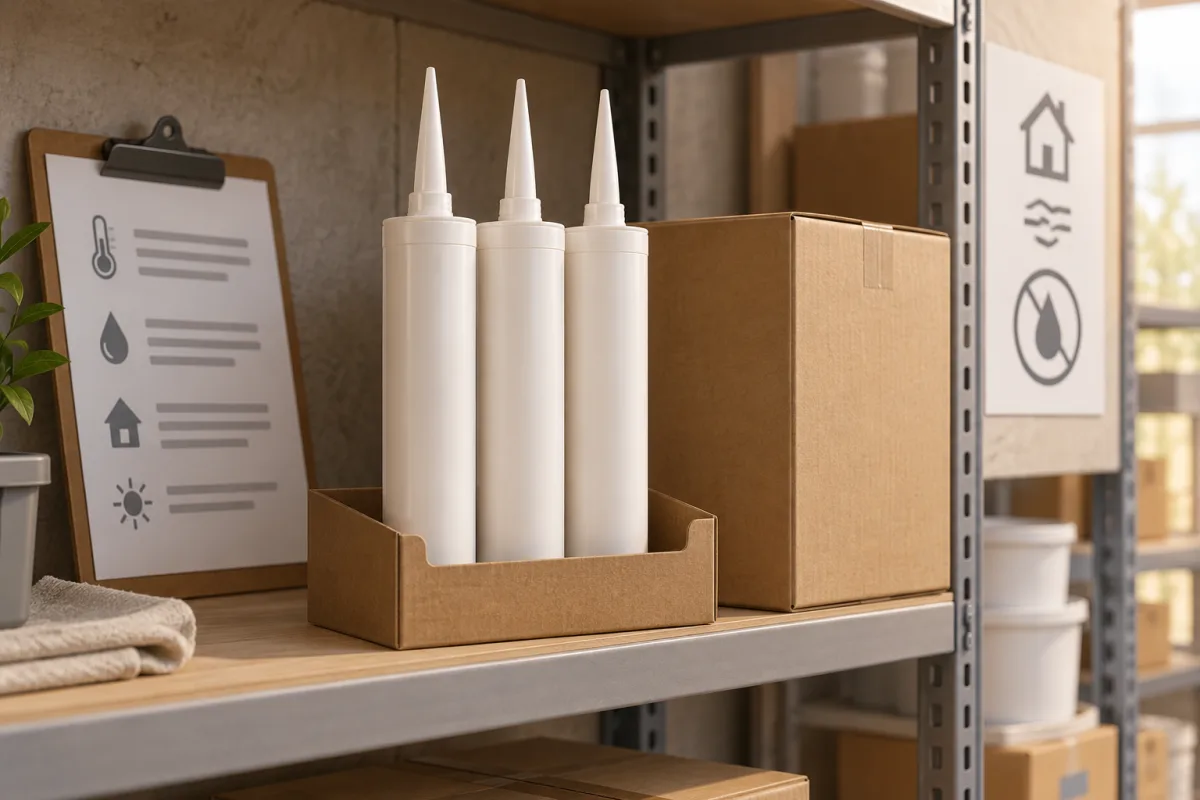
Check the exact adhesive reference, production or expiry identification, required storage conditions and expected use date. Agree on remaining shelf life at the point of delivery stated in the order. Do not assume shipment date starts a new shelf-life period.
Read shelf life separately from working time and cure time
A product may list shelf life, open time and curing information in different parts of its technical data. They answer different questions: storage before use, application handling and development of the bond. Sika’s EBT+ CLEAR page, for example, specifies shelf life and original unopened packaging conditions for that exact product. Its figures are not a generic rule for wall panel adhesives. Obtain the current regional document for the selected material and confirm how its batch or date code is decoded. An invoice date alone is insufficient evidence.
Work backward from the last installation phase
Write down expected delivery, customs handling, distributor storage, onward delivery and the last planned installation phase. Use confirmed dates where available and identify uncertain intervals instead of presenting guesses as guarantees. Ask whether the offered batches leave enough usable time for that schedule under the stated conditions. Record which delivery point the remaining-life agreement refers to; arrival at a port is not necessarily arrival at the site. If the schedule extends beyond the available window, discuss staged supply or a technically approved local source rather than ordering excess accessories.
Make storage responsibility visible along the route
Request the manufacturer’s storage instructions and check whether each responsible party can meet them. A sealed cartridge does not establish that it was stored correctly. Discuss exposure during transport and temporary site storage without assuming every route requires refrigeration. Keep the product identifier, batch, packaging condition and available storage records together. Review the safety data sheet with the logistics provider for the actual shipment; this guide does not classify the material for transport. Any substitution needs renewed compatibility and documentation review, even when the package size looks identical.
Create a receiving hold and stock rotation rule
At receipt, compare labels and quantities with the order, record date codes and segregate damaged or unclear stock pending supplier advice. Rotate stock by the confirmed expiry sequence rather than only by arrival date. Do not relabel, blend or add solvent to make expired material appear usable. If a pack has been opened, ask for the manufacturer’s applicable handling guidance rather than assigning it the original unopened life. Before installation, reconfirm the product and substrate approval. A quick trial can reveal a handling problem but does not extend shelf life or certify long-term adhesion.
Next step
Send the panel reference and project schedule when discussing accessories. Confirm suitability, delivery-point remaining life and storage responsibilities in writing before adding adhesive to the purchase order.