Luvie Industry · 2026-10-10
Can shelves and mirrors be fixed to decorative wall panels?
A retail wall can look finished before anyone asks where the shelf brackets will attach. The same problem appears when a hotel mirror, coat hook or sign is added after the decorative panels are ordered. Importers and project buyers should coordinate the accessory schedule with the wall specification early. A decorative finish is not evidence of load-bearing capacity, and this guide is a purchasing checklist rather than a fastening design.
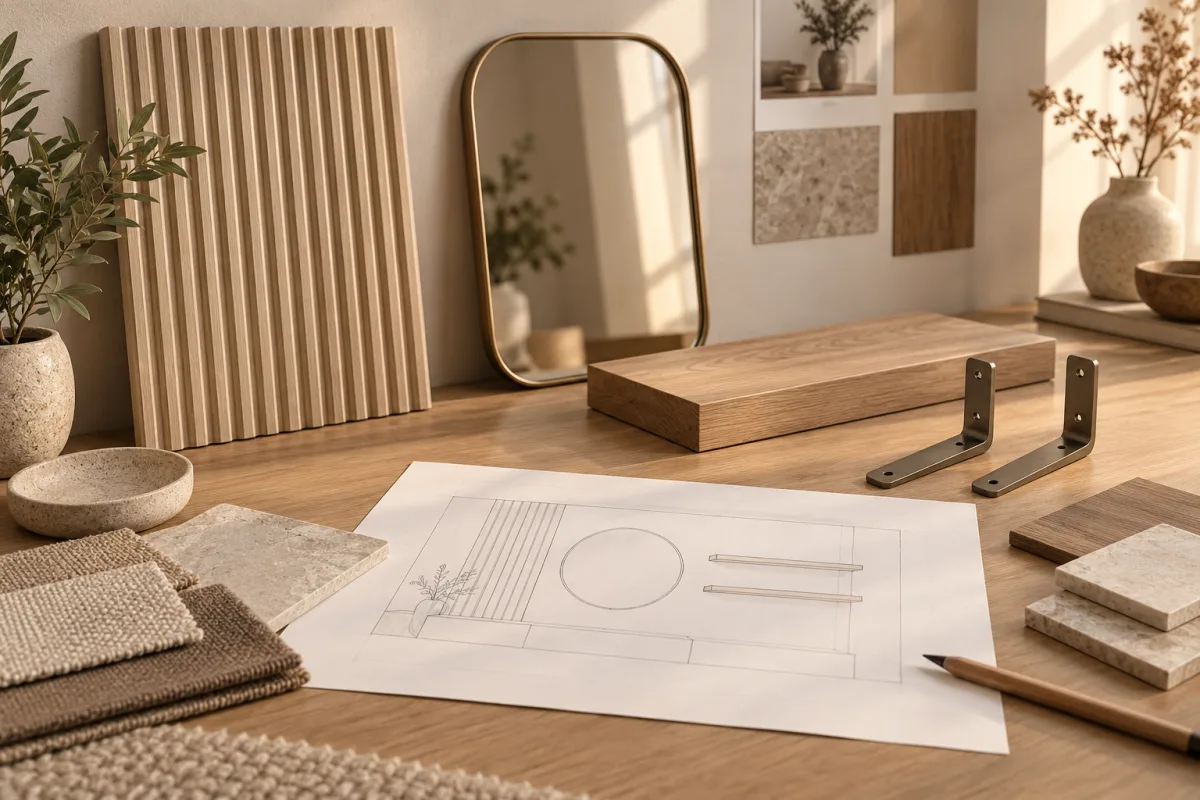
Do not assume that a decorative panel can support an accessory. Have the qualified project team define the load path, underlying support and compatible fixing detail for the exact wall assembly. Purchase the finish only after the accessory requirements are understood.
List the accessories before approving the wall finish
Ask the designer or operator for an accessory schedule showing location, dimensions, intended use and the supplier’s mounting requirements. A mirror, shelf and frequently handled hook may place different demands on a wall. Include likely future changes rather than recording only the opening-day display. Identify who is responsible for support design and site verification. The buyer should not promise a capacity based on panel thickness, a small sample or an attractive installation photograph. Where the accessory information is missing, keep the wall-and-fixture combination unresolved instead of treating the panel order as approval.
Distinguish cladding from the structure behind it
Dumawall XL instructions tell users not to attach heavy accessories directly to its panels and describe attachment to the wall behind. That manufacturer-specific guidance illustrates why decorative cladding and accessory support are separate questions; it is not a tested fixing detail for Luvie PVC or WPC. Ask the project professional to identify the actual substrate, any cavity or lining and the suitable support arrangement. Do not copy screw sizes or plug choices from a generic article. Hollow construction, existing coatings and concealed services require site-specific review before a method is selected.
Coordinate penetrations and appearance together
Show proposed bracket positions on the panel layout so the installer can review joints, grooves, trims and access. Ask how the approved detail avoids unintended damage or compression of the finish, without inventing a spacer or drilling instruction. In wet or fire-resisting assemblies, penetrations may affect requirements beyond the decorative layer and must be assessed by the relevant specialist. Check concealed electrical and plumbing routes before work. A mock-up can help compare appearance and access, but it does not establish structural capacity. Keep the support approval separate from aesthetic sample approval.
Keep a record for maintenance and later changes
Record the approved wall assembly, accessory reference, mounting detail, responsible installer and any limits on future alterations. Include location photographs before concealed layers are closed when the project team requires them. Retail operators often change displays, so pass the record to the people who will maintain the space. Can an extra shelf be added later? It should be reassessed against the actual support, not assumed safe because the first shelf remained in place. Can adhesive alone support a mirror? Use only an explicitly approved system for that exact application; this guide does not authorise one. If evidence is missing, pause the accessory installation rather than guessing.
Next step
Send the intended accessories, panel finish and wall construction with your inquiry. Select the decorative range in the catalog while the project team confirms the support design.