Luvie Industry · 2026-10-10
When should buyers remove protective film from PVC panels?
A distributor opens a carton and sees a dull surface or a small crease. Is the decorative face damaged, or is the mark only in the temporary film? Protective film can make incoming inspection less straightforward. For importers supplying South American renovation projects or Gulf showrooms, the useful question is not simply whether a panel has film. It is how that exact film should be stored, inspected and removed without losing the record of the original condition.
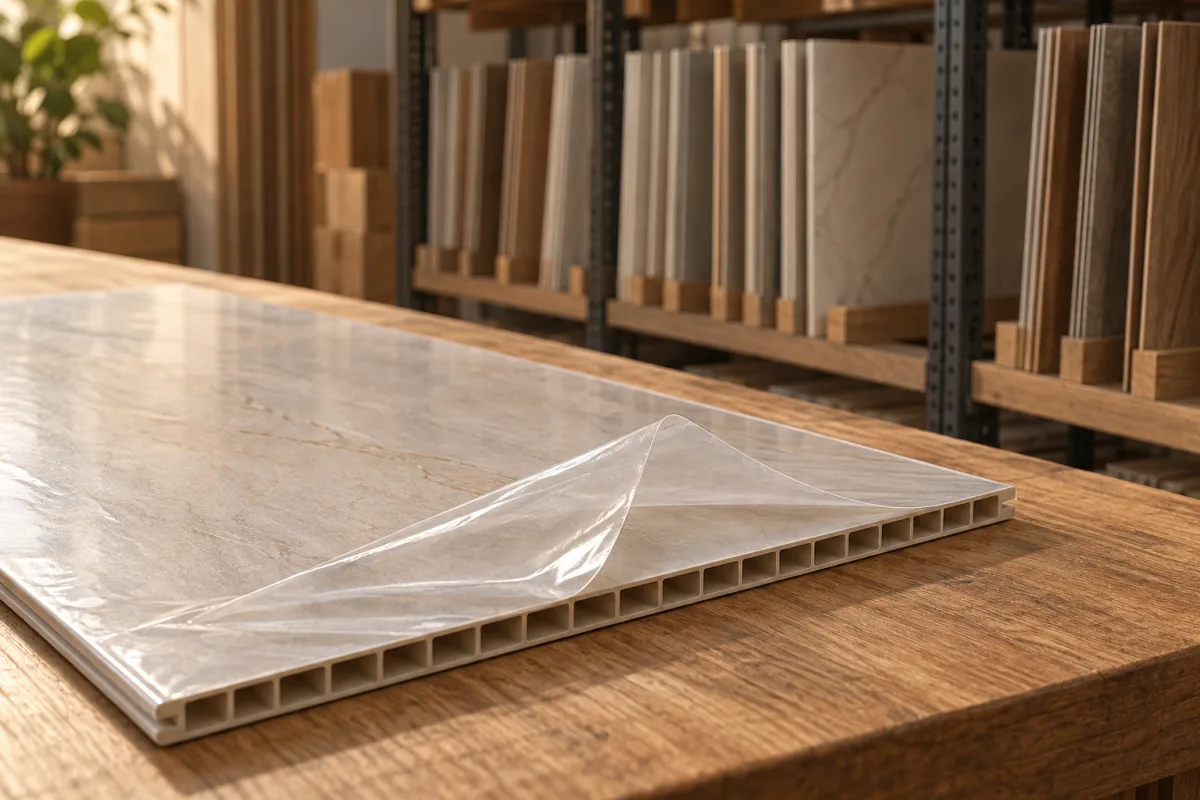
Confirm whether the model has removable protective film, obtain its storage and removal instructions, and agree an inspection sample with the supplier. Do not assume that the film is permanent protection or that every decorative surface permits the same removal method.
Identify the temporary layer before judging the finish
Ask the supplier to distinguish removable transport film from a permanent decorative laminate or coating. Record the model, finish, production reference and packaging identification. If the sample has a marked corner or pull tab, verify its purpose rather than peeling an unidentified layer. Compare the approved sample and delivered item under similar lighting, with their film status recorded. A photograph through protective film may not represent the final gloss or colour. Decide which sample can be opened for inspection before removing film from an entire shipment. Keep both the packaging photographs and the revealed sample evidence so later discussions do not depend on memory.
Agree storage conditions instead of assuming covered means protected
Palram warns that heat and direct sunlight can make protective film on its flat panels difficult to remove. This is a reason to ask the storage question, not a temperature limit or guarantee for Luvie panels. Request written conditions for the actual film-and-finish combination, including handling and permitted storage duration. Identify the warehouse location before delivery: a shaded receiving area and a display beside sunlit glazing are different exposures. Do not invent a universal stacking height or storage period. Give the warehouse team the relevant instructions and keep the package identification visible.
Use an approved removal check, not an improvised rescue method
Ask when the film should be removed relative to inspection and installation, and who accepts the revealed finish. If removal becomes difficult, stop and document the condition. Do not prescribe heat guns, blades or solvents based on another product’s instructions; a rescue attempt can change the surface and obscure what happened. Send photographs, storage history and model identification to the supplier for a specific response. Separate marks in the disposable film from marks on the decorative surface, and keep suspect pieces aside rather than installing them to meet a deadline.
Pass the film instructions to the next buyer
Importers should include the agreed storage and removal note when cartons move to a distributor, installer or project site. Record whether an inspection piece was opened and protect it according to the supplier’s instructions. Buyers often ask whether film can remain until a building opens: that needs a model-specific answer, especially if work is delayed. Others ask whether leaving film on proves that goods are unused; film alone is not a condition report. A useful handover identifies the product, receipt date, inspection sample, observed condition and unresolved questions. This turns a cosmetic complaint into a traceable check rather than an argument over photographs.
Next step
Send the panel reference, film condition and intended storage location with your inquiry. Use the catalog to shortlist finishes, then request the current instructions for the selected model.