Luvie Industry · 2026-10-10
Which adhesive documents should a wall panel buyer request?
A sample board looks convincing, but the proposed adhesive is described only as strong glue. That is not enough information for a distributor coordinating a PU stone-look wall, a PVC renovation or a WPC display. A buyer in Brazil, the Gulf or Uzbekistan needs a clear document handoff to the local installer. This guide explains what to request; it does not choose a chemical, specify protective equipment or replace a site safety assessment.
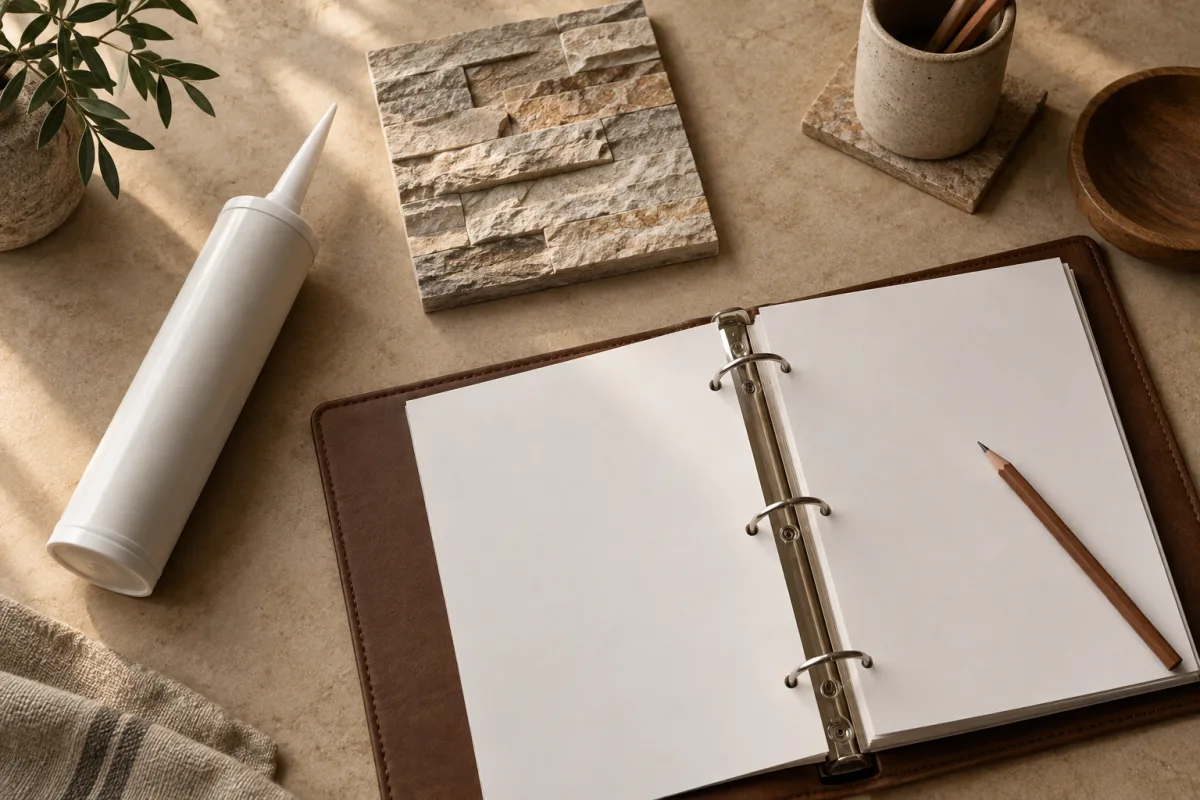
Request the exact adhesive identity, current technical instructions, relevant safety data sheet and written compatibility confirmation for the panel backing and substrate. A safety data sheet is not a bond-strength certificate, and a successful sample is not approval for every site.
Start with the exact combination, not a generic glue name
Identify the selected panel model, backing surface, substrate, existing coating and intended room conditions. Photograph or describe the wall before requesting an adhesive recommendation. A painted masonry wall, tile and an exposed board substrate are not interchangeable purchase briefs. Ask both relevant suppliers to clarify compatibility and any preparation exclusions. Record whether primers, joint materials or mechanical support are part of the proposed system. Do not convert a recommendation for another brand of panel into Luvie approval, even if both products use the same broad material name.
Read safety and application documents as different evidence
The UK HSE explains that a safety data sheet provides information for assessing chemical risks and is not itself a risk assessment. Its legal context is the UK; destination rules must be checked locally. For procurement, keep safety information separate from the technical instructions that define permitted applications, preparation and use conditions. Neither document should be treated as certification of a finished wall. Ask for the current revision and confirm that the product name matches the supplied cartridge or container. An unrelated document with a similar trade name can create a false impression of completeness.
Resolve practical constraints before promising an installation date
Ask the installer to review the manufacturer’s stated working conditions and process for the actual site. Record unresolved questions about preparation, curing, temporary support and access. Do not invent a universal curing time or assume that a room can reopen when the surface feels dry. The competent site team should assess exposure controls and the applicable safety requirements; a buyer guide cannot prescribe those remotely. If a sample trial is agreed, document the exact materials and conditions. A small trial may help screen the combination, but it is not a structural test or a guarantee for repeated installations.
Make substitutions visible in the order handoff
Prepare a document register with product identity, document revision, supplier contact, compatibility response and the person responsible for site approval. Give the installer access before work begins, not only after a problem. If the adhesive, primer, panel backing or wall coating changes, reopen the review rather than silently accepting an equivalent. Buyers often ask whether an SDS proves low emissions after installation: it does not establish that claim for the complete assembly. Others ask whether adhesive can replace every fixing; that requires the approved system instructions. Keep unsupported claims out of the sales description and leave unresolved combinations unapproved.
Next step
Share the panel model, substrate description and proposed adhesive documentation with your inquiry. Catalog selection is the beginning of the specification process, not adhesive approval.