Luvie Industry · 2026-10-20
Does SPC flooring with an attached pad need extra underlay?
A distributor orders SPC flooring with an attached pad, then a customer asks for another layer to make the floor quieter. Adding material sounds like an upgrade, but the decision belongs to the approved flooring assembly. For apartments in South America, Gulf fit-outs or a concrete-floor renovation in Uzbekistan, start with the exact model and its installation instructions—not the assumption that more cushioning is better.
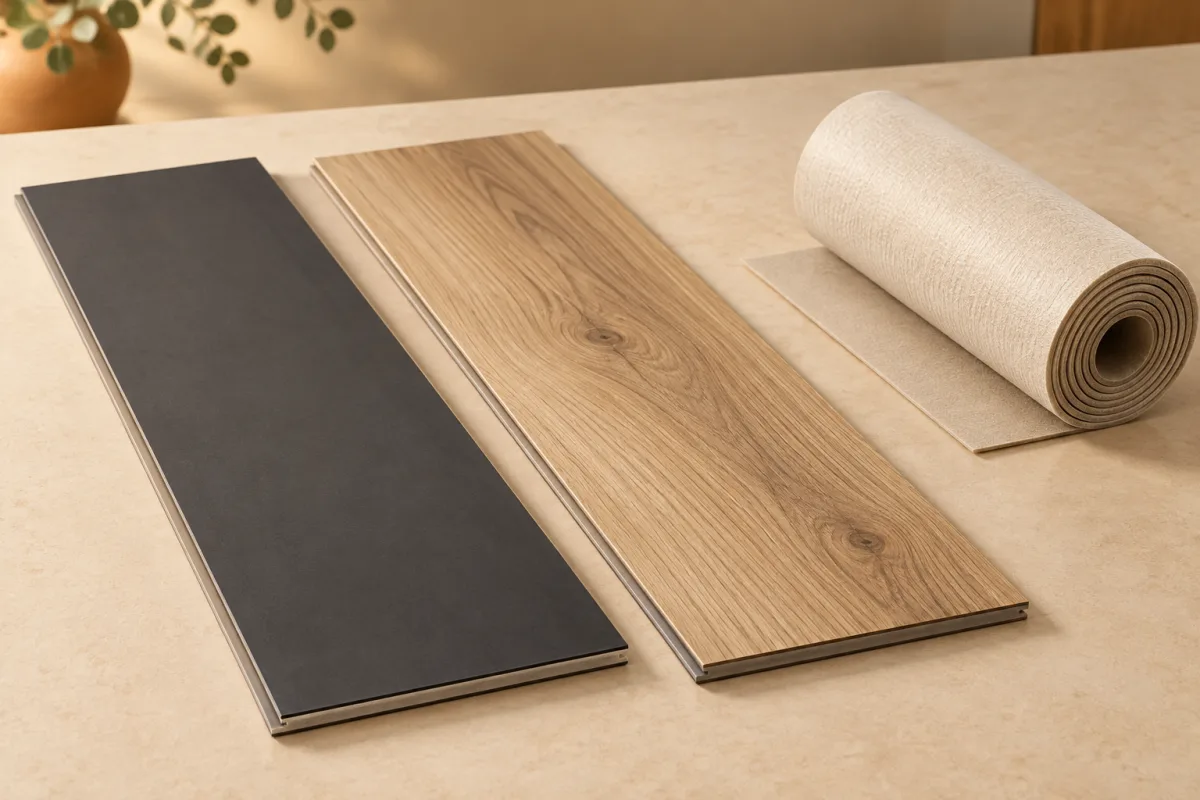
Do not automatically add separate underlay beneath flooring with an attached pad. Obtain written approval for the exact combination. An underlay, a moisture-control layer and substrate leveling have different functions and cannot simply replace one another.
Identify the complete SPC flooring assembly
Ask whether the quoted model has factory-attached backing, what separate layers are permitted and which installation document applies to that model. Quick-Step, for example, explicitly disallows separate underlay for its AlphaVinyl Pad product. That is a product-specific instruction, not a rule or warranty statement for every SPC floor. Record the flooring reference, backing, proposed underlay and substrate in one specification. A photograph of the plank underside does not establish compatibility. If the supplier changes the backing or model after sampling, reopen the approval rather than assuming the old answer still applies.
Separate cushioning, moisture control and leveling
A soft layer should not be treated as a repair for a floor that fails the selected product’s substrate requirements. Have the responsible installer assess flatness, soundness and moisture using the applicable instructions. Also ask whether a separate moisture-control layer is required for this substrate and assembly. Do not conclude that an attached pad is a vapor barrier, or that an additional membrane is always needed. The approved build-up must answer those questions. Keep substrate preparation as a separate line in the project scope so a low material quotation does not silently omit necessary work.
Ask what an acoustic result actually covers
If sound reduction drives the purchase, request the test report and identify the floor, backing, extra layers, base construction and method it describes. A number from a different assembly does not establish the result in the customer’s building. Ask the project’s acoustic adviser to interpret requirements where necessary. Avoid advertising a generic decibel figure copied from an underlay brochure. A sample area can reveal appearance, walking feel and installation details, but it is not a substitute for an acoustic test or approval of the full system.
Release one approved specification to purchasing and installation
Before ordering, agree the finished build-up at doorways and transitions and confirm how the selected floor interfaces with adjacent finishes. Attach written compatibility confirmation to the purchase record. List any separate underlay by exact reference; if none is approved, make that explicit so the installer does not add one from habit. On receipt, compare carton codes and backing with the approved sample. If a substitute arrives, hold that change for review. Keep the applicable installation document with the handover record rather than relying on a verbal promise from a salesperson.
Next step
Shortlist SPC finishes in the catalog, then send the selected model, substrate and proposed layers for review. Buy an agreed flooring assembly, not an unspecified bundle of extra cushioning.