Luvie Industry · 2026-10-23
PU stone-effect walls for Uzbekistan showrooms: plan for changing displays
A showroom wall is rarely a permanent composition. Product ranges change, shelves move and new displays need space. A buyer specifying PU stone-effect panels for a Tashkent showroom should decide how those changes will happen before covering the entire wall. This guide concerns procurement and handover planning; it does not assign a load capacity to foam cladding or prescribe anchors for an unknown wall.
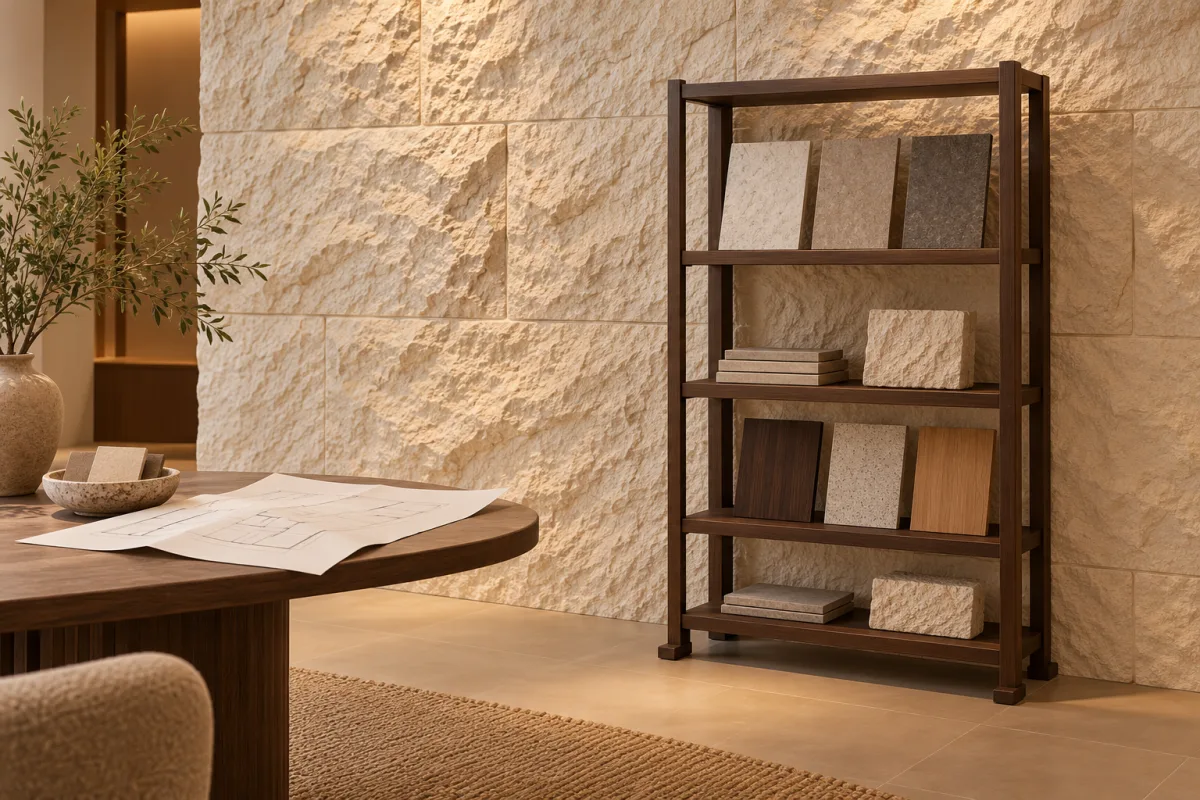
Separate decorative finish from the display-support strategy. Agree which areas remain clear, which fittings need a qualified fixing design and how affected panels can be repaired or replaced. Record those decisions before ordering the finish.
Map the next layout as well as the first
Ask the showroom operator which display positions may change and which are expected to stay. Mark signage, shelves, sockets and circulation areas on an elevation. Compare a freestanding display arrangement with a wall-mounted one before closing the specification. Freestanding furniture still needs its own safety assessment and any required restraint; it is not automatically risk-free. Use the actual room and intended merchandise, not a decorative photograph, to decide what the wall must accommodate.
Keep the load path separate from PU decoration
Give the responsible installer or designer the existing substrate, proposed cladding depth and intended display loads. Do not treat the relief face as a structural fixing surface. The fischer reference distinguishes a non-bearing layer from the anchoring substrate in its own ETICS system; it does not recommend that exterior product for this interior wall. Ask a qualified party to select the actual support arrangement, including any required backing, spacers and access. Never infer an anchor size or safe shelf load from panel thickness alone.
Decide what a later change will leave visible
Review likely changes on the wall elevation: moving a shelf may expose old holes, a cut edge or a section that has aged differently. Ask the panel supplier about the selected system’s repair and replacement method rather than promising invisible repairs. Locate seams and boundaries so the proposed maintenance approach is practical. A glued panel is not automatically demountable. Confirm whether a replacement can be reached without disturbing adjacent trims, wiring or the display support, and keep any unresolved issue in the design review.
Order and hand over a useful spare record
Agree spare pieces from the actual layout and maintenance plan, not an arbitrary universal percentage. Record finish code, batch identification if available, panel orientation and the approved repair materials. Store retained pieces according to the chosen product’s instructions and label them for the showroom zone. Give the operator an as-built drawing showing approved support positions and concealed services. Before each future display alteration, have the responsible team reassess fixing and access rather than allowing staff to drill wherever a shelf looks attractive.
Before you request a quotation
- Current and likely future display elevations
- Qualified support strategy independent of the finish
- Agreed repair or replacement access
- Spare-piece identification and as-built handover
Frequently asked questions
Does a thick PU panel make a shelf fixing stronger?
Panel thickness alone does not establish a safe load path. The actual substrate and fixing arrangement need assessment.
Will spare panels guarantee an invisible future repair?
No. Batch, ageing, lighting and the repair method can affect appearance; retain references but do not promise a perfect match.
Next step
Send Luvie the PU finish reference and showroom elevation for your Uzbekistan order. Discuss available pieces and maintenance information while the project team resolves display supports.