Luvie Industry · 2026-10-09
Can a cleaning chemical damage a decorative PVC wall panel?
The purchasing team approves a wood-look sample, but the facilities team already uses a different cleaning chemical throughout the building. That mismatch is easy to overlook in a hotel refurbishment or retail rollout. Choosing decorative PVC wall panels requires a discussion about the finished surface and the cleaning routine, not simply a statement that PVC is easy to wipe. This is a procurement compatibility checklist, not a disinfectant recipe or a hygiene certification.
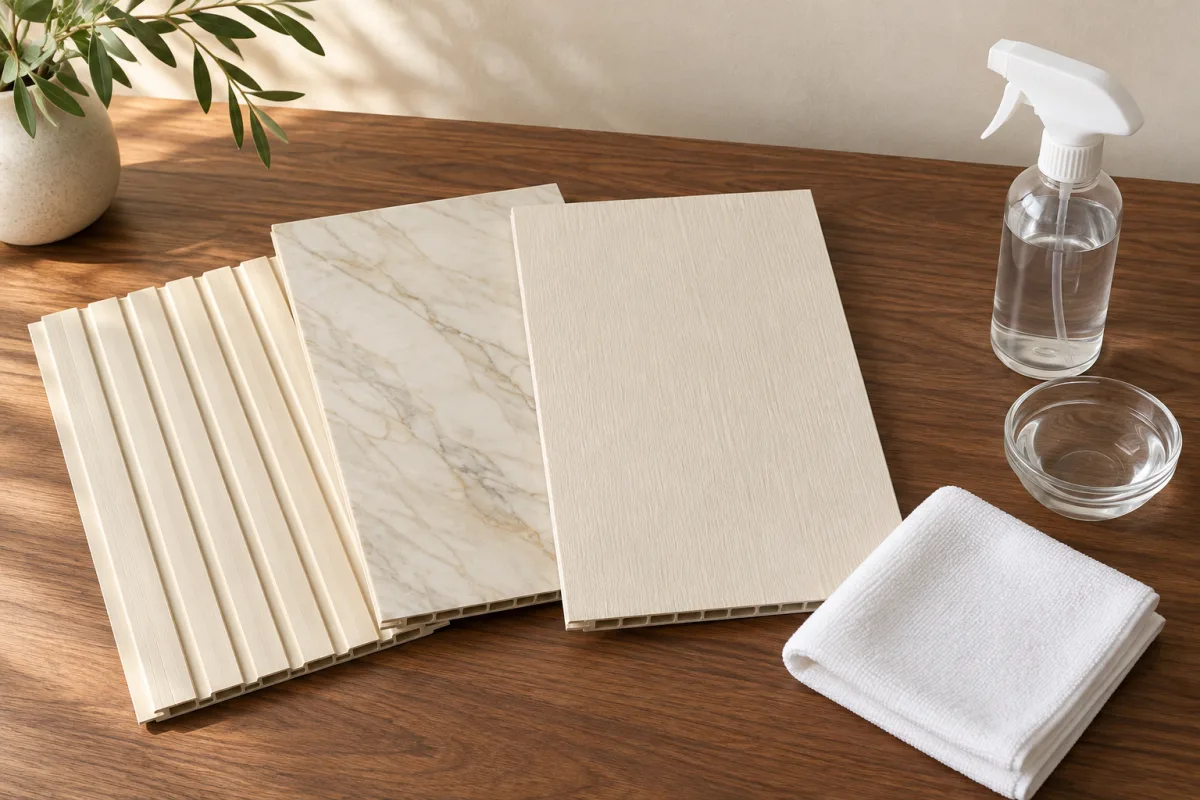
Compatibility depends on the exact panel surface, chemical formulation and method of use. Obtain model-specific written care instructions and agreement on the proposed routine before ordering. Do not transfer another manufacturer's approved-cleaner list to a decorative Luvie finish.
Identify the layer that the cloth will touch
The material name does not describe every surface treatment. Ask whether the chosen model has a printed layer, film, coating or textured face, and request the maintenance instructions for that construction. Keep the finish reference and sample batch identifiable. A cleaner tolerated by one plain PVC sheet is not automatically suitable for another decorated surface or its joint sealant. Palram's published guide warns about chemical and abrasive damage and recommends checking cleaners on an inconspicuous area for its listed products. That supports asking compatibility questions; it does not certify a Luvie panel or authorise the same chemicals. Procurement should obtain a specific answer instead of converting a general statement about plastic into a building-wide cleaning policy.
Give the supplier a complete cleaning brief
Obtain the cleaner's exact commercial name and current technical information from the facilities team. Record the intended dilution, contact time, application method, wiping material, frequency and any rinse requirement as specified by the cleaner's manufacturer. Do not improvise a stronger concentration or mix products. Include the parts around the panel: trims, sealants and adjacent finishes may have different instructions. Ask the panel supplier which parts of this routine have supporting information and which remain unverified. Keep cleaning and disinfection objectives distinct; a visually clean wall is not proof of a particular hygiene outcome. For regulated environments, the relevant project specialists must define the required system and evidence rather than relying on a decorative product page.
Agree a controlled sample review before a full rollout
Where the suppliers approve a trial, use an identified sample of the exact finish and retain an untreated comparison sample. Document the agreed method and inspect the appearance under consistent light after the prescribed process. Record dulling, colour change, surface tackiness or other visible changes without assuming that no visible change proves long-term compatibility. A sample trial is a screening step, not a laboratory durability test or a guarantee for repeated service. If the cleaning routine is mandatory and evidence is unavailable, leave the finish unapproved rather than hiding the uncertainty. A hotel corridor and a back-of-house service space may need different material choices even when a purchasing team wants one colour palette throughout.
Hand over a maintenance record with the order
Keep the approved finish, written care instructions, cleaner identification and review outcome together. Give the installer and facilities team the same record; a maintenance note that never reaches the cleaning contractor cannot protect the selection process. Define who reviews substitutions when a cleaner is changed after opening. Buyers sometimes ask whether every disinfectant is safe on PVC: there is no blanket answer for all decorated panels. Others ask whether an inconspicuous test is enough: it may reveal an immediate appearance problem, but it is not evidence for every exposure or service life. Ask for the narrowest supported claim and preserve any exclusions. This makes the handover useful without inventing performance that the selected product has not demonstrated.
Next step
Share the finish reference and the proposed cleaner documentation when requesting samples. Start with the catalog for appearance, but approve the maintenance routine separately before placing a project order.